The Analytics With Avery Blog
2026 NHL Award Predictions
By Avery Doiron | April 27, 2026
Introduction
Note: This post was written using an earlier version of my player card model and design. The player cards shown below are from that older version and the project has since been updated with a new model and visuals.
With the regular season complete, the playoffs underway, and award finalists set to be announced in the coming days, it’s time to take a look at the NHL’s major awards and who has the strongest case to win them. In this post, I rank my top five candidates for each major individual award based solely on regular-season performance, with playoff results not considered. The awards covered include the Hart, Norris, Vezina, Selke, Calder, Jack Adams, and Jim Gregory.
Each trophy section begins with the NHL’s official award description. This is followed by visualizations from my player or team cards for the top five candidates, along with relevant statistics and my own thoughts explaining each ranking. Note that the rankings on my cards are based on weighted, multi-season metrics, while these awards are determined solely by this season’s performance. As a result, when comparing players in award sections, a player may rank higher on a card in some aspects but appear lower in the award rankings. All data used in this blog post was sourced from Natural Stat Trick. These predictions are not necessarily how I expect the voting to unfold, but rather my selections for who I believe most deserves each award based on their performance and overall impact during the 2025-2026 NHL season.
The Hart Memorial Trophy
"The Hart Memorial Trophy is an annual award given to the player judged to be the most valuable to his team."
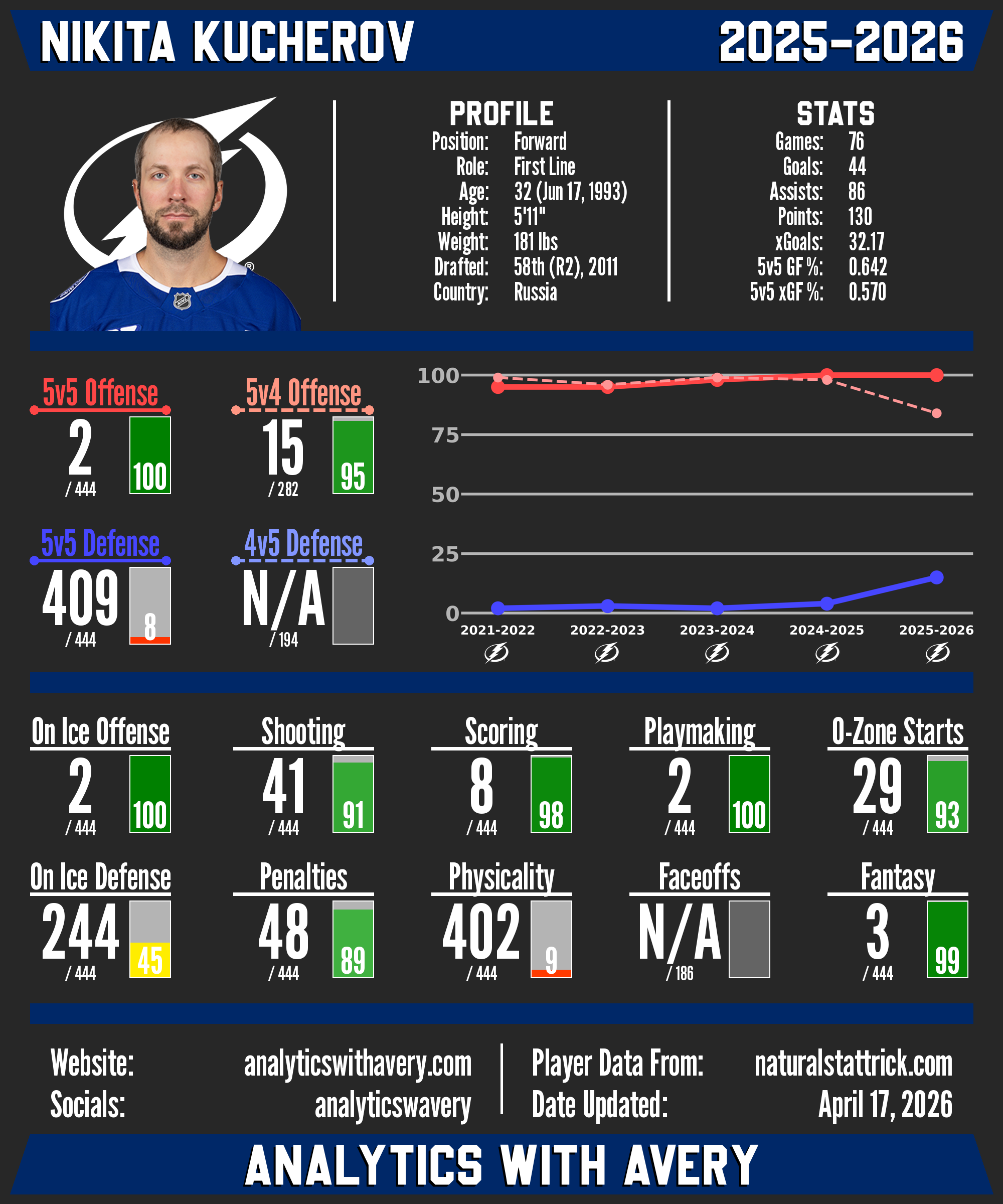
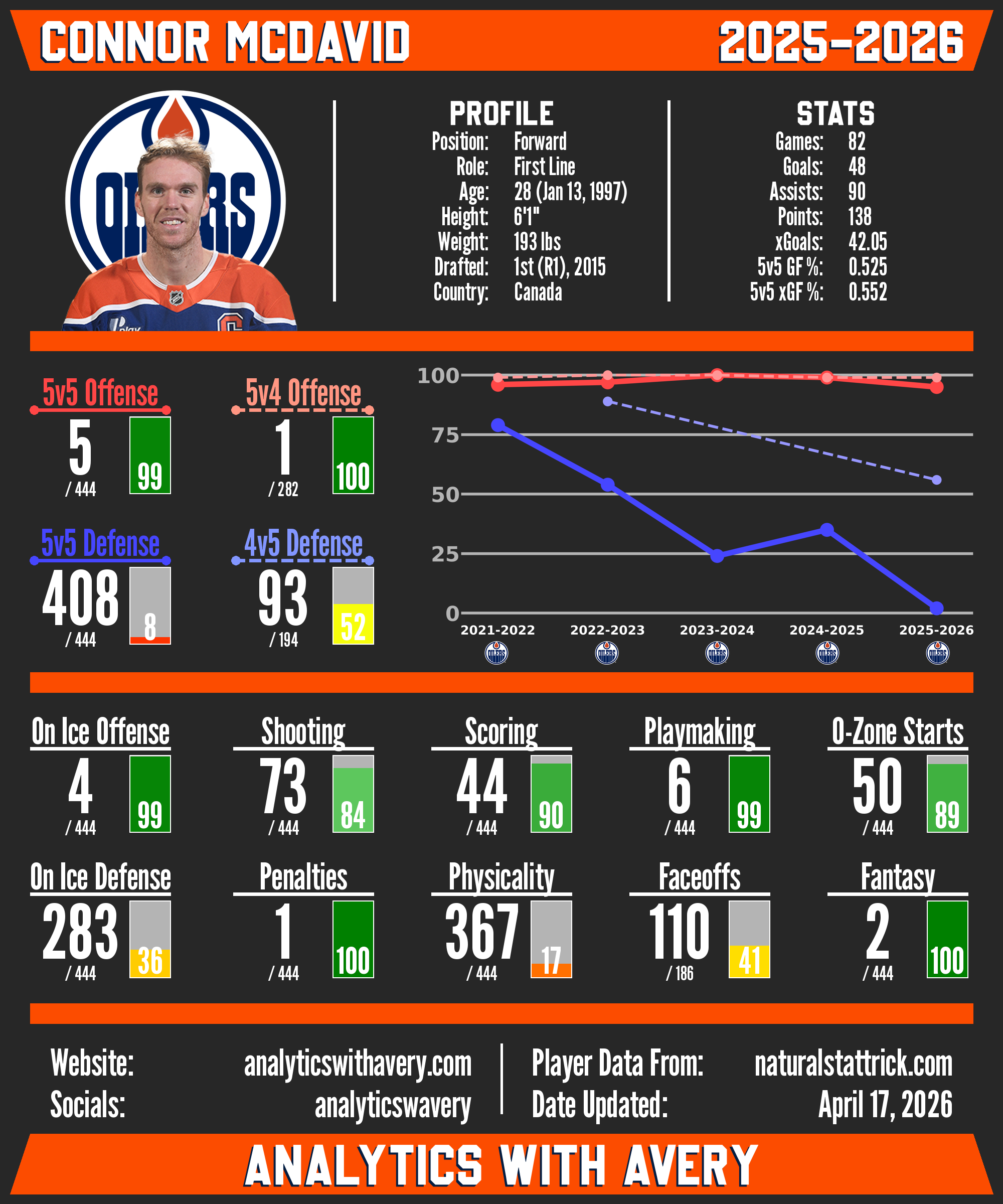
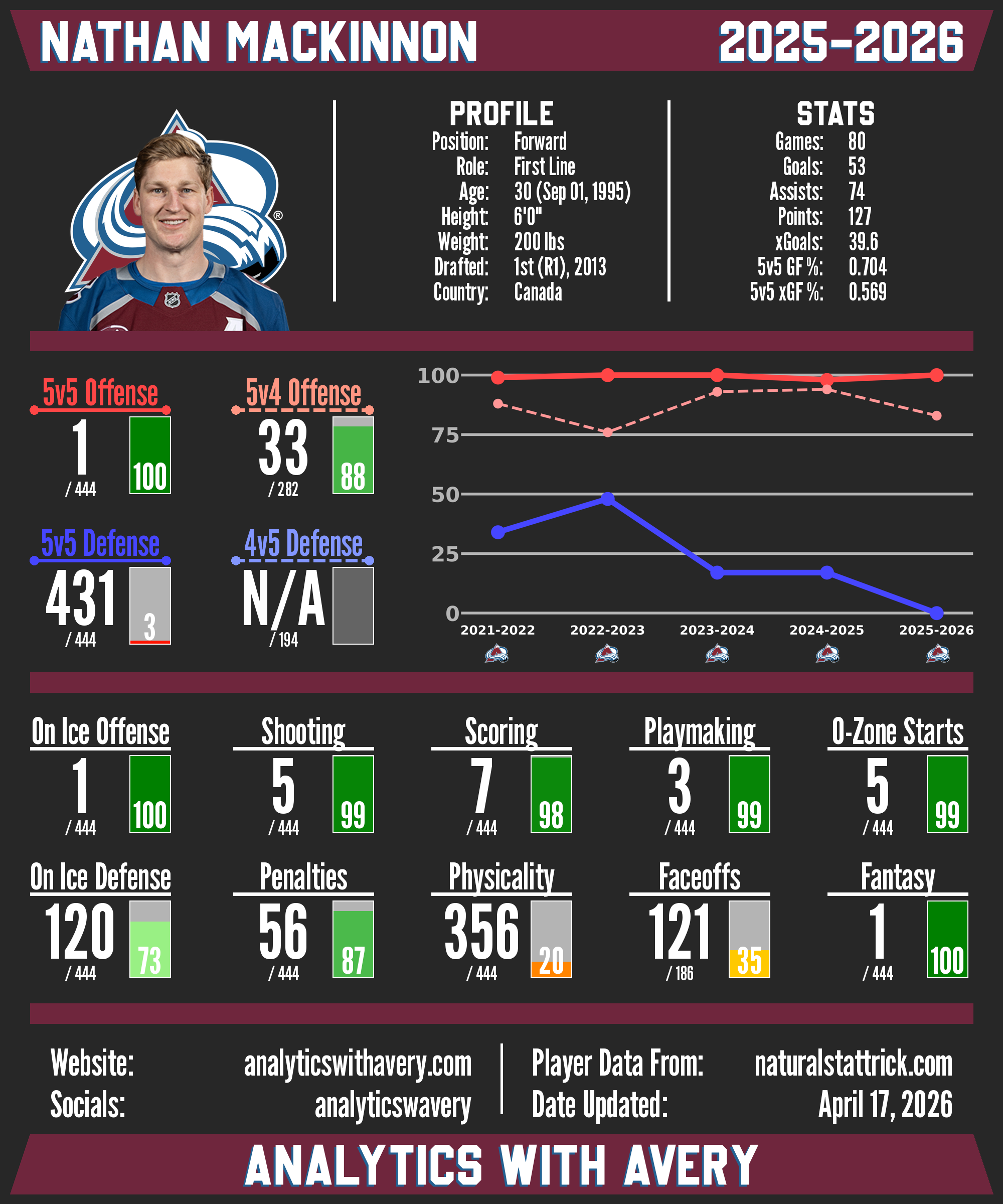
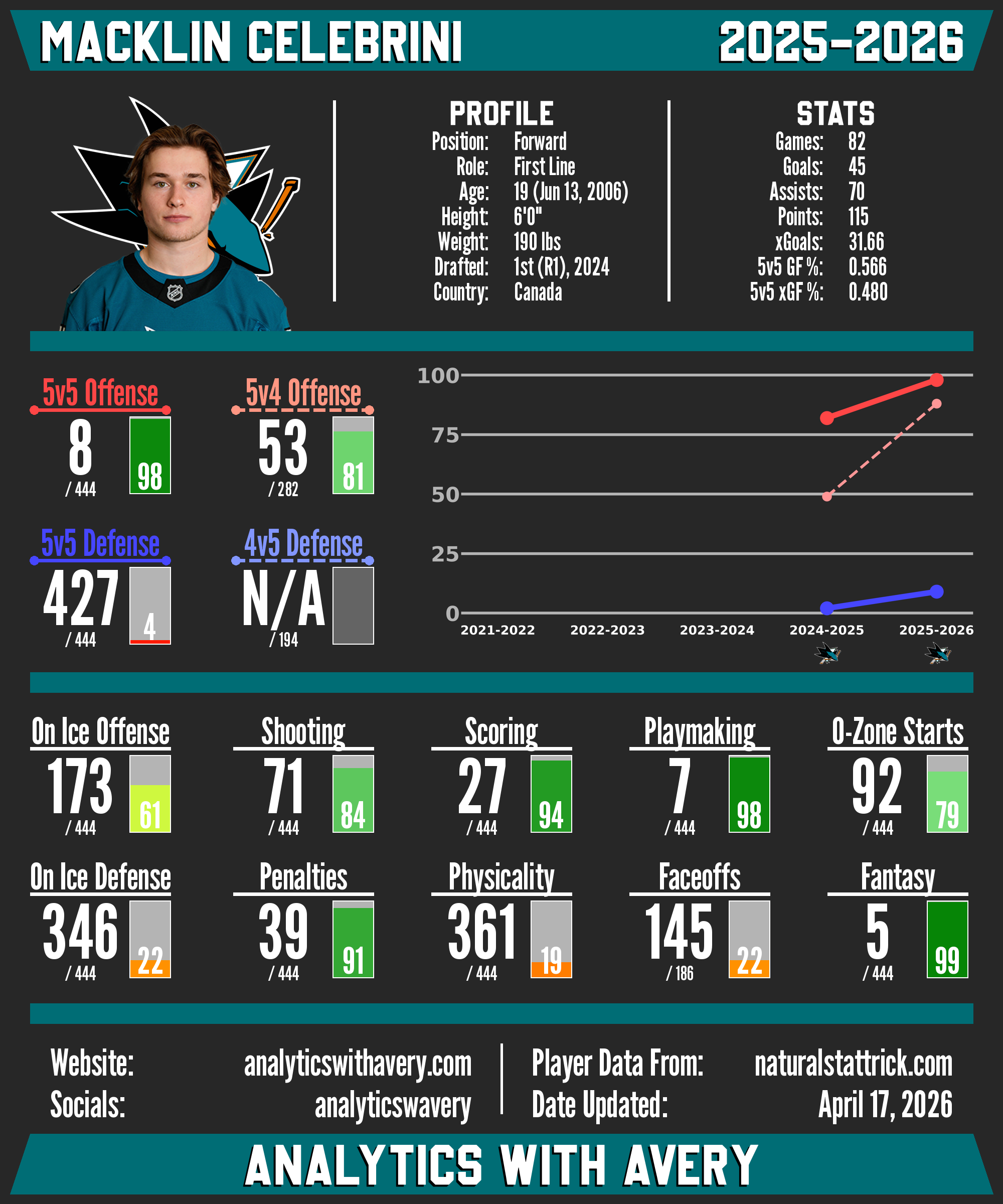
1. Connor McDavid
82 GP, 22:59 Avg. TOI
48 G, 57 A1, 33 A2, 138 P
52.45 5v5 GF%, 55.22 5v5 xGF%
56 Penalties Drawn, 22 Penalties Taken
2. Nikita Kucherov
82 GP, 20:20 Avg. TOI
44 G, 51 A1, 35 A2, 130 P
64.18 5v5 GF%, 56.97 5v5 xGF%
27 Penalties Drawn, 20 Penalties Taken
3. Nathan MacKinnon
80 GP, 22:16 Avg. TOI
53 G, 50 A1, 24 A2, 127 P
70.42 5v5 GF%, 56.85 5v5 xGF%
21 Penalties Drawn, 14 Penalties Taken
4. Macklin Celebrini
82 GP, 21:19 Avg. TOI
45 G, 46 A1, 24 A2, 115 P
56.59 5v5 GF%, 47.97 5v5 xGF%
34 Penalties Drawn, 22 Penalties Taken
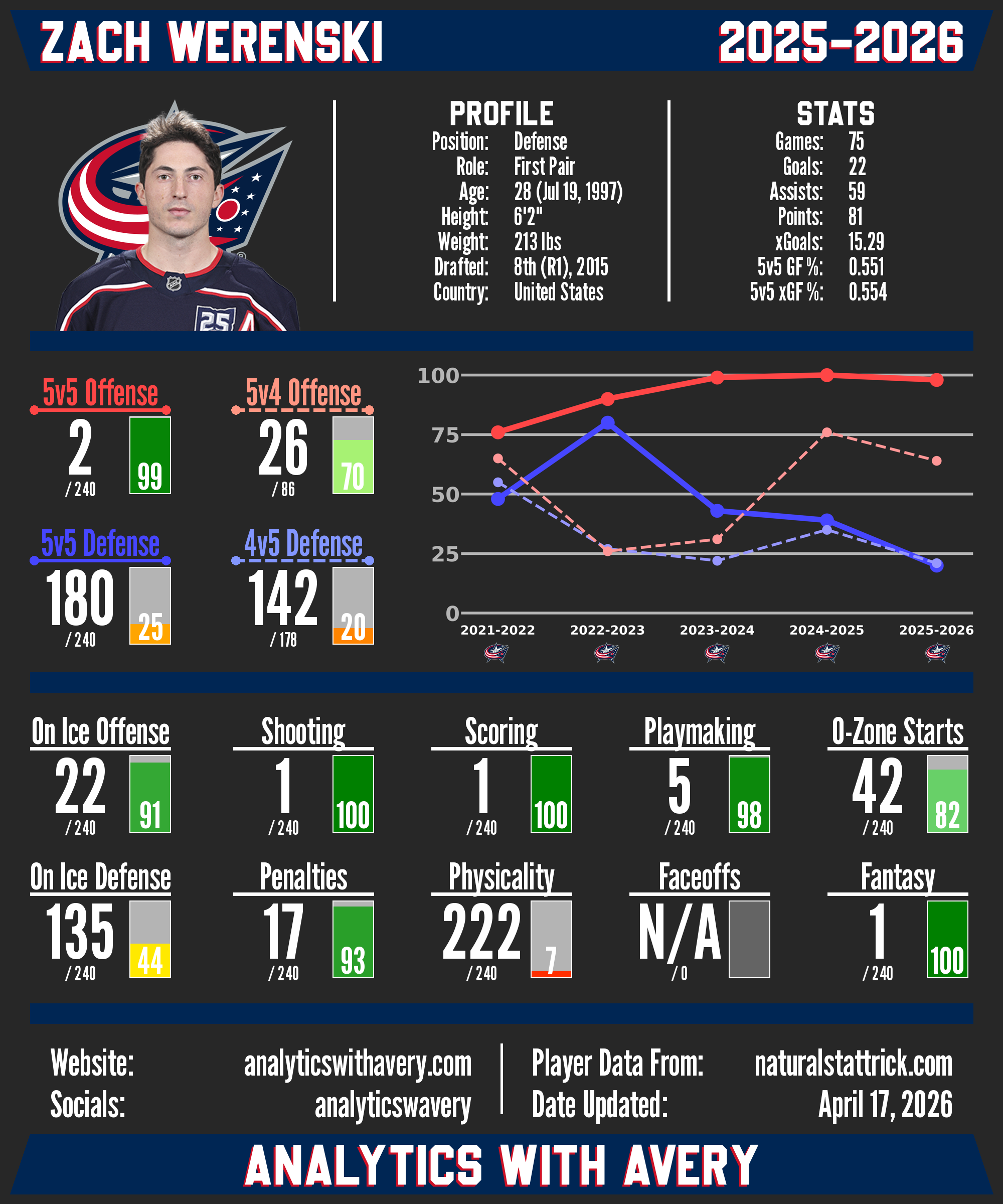
5. Zach Werenski
75 GP, 26:37 Avg. TOI
22 G, 28 A1, 31 A2, 81 P
55.10 5v5 GF%, 55.44 5v5 xGF%
11 Penalties Drawn, 9 Penalties Taken
Thoughts
This was a very tight Hart race, with Connor McDavid, Nikita Kucherov, and Nathan MacKinnon all having legitimate cases. In the end, I gave the edge to McDavid. Along with leading the league in points, he drew the most penalties of any player, drawing 56 while taking just 22. McDavid’s supporting cast in Edmonton – especially after Draisaitl was injured – is also less impressive than the teams surrounding Kucherov and MacKinnon in Tampa and Colorado, respectively. Kucherov and MacKinnon both had outstanding seasons as well, particularly in terms of offensive output and team success.
Celebrini had one of the most impressive seasons ever by a 19-year-old, recording 45 goals and 115 points. He is already one of the best players in the league and likely has at least one Hart Trophy in his future, but his season falls just short of the top three. As you’ll see in the next section, I believe Zach Werenski was the best defenseman this season and deserves recognition in the Hart conversation, but the four forwards ahead of him had stronger seasons relative to their positions.
The James Norris Memorial
"An annual award given to the defenseman who demonstrates throughout the season the greatest all-round ability in the position."
1 - Zach Werenski
75 GP, 26:37 Avg. TOI
22 G, 28 A1, 31 A2, 81 P
55.10 5v5 GF%, 55.44 5v5 xGF%
11 Penalties Drawn, 9 Penalties Taken
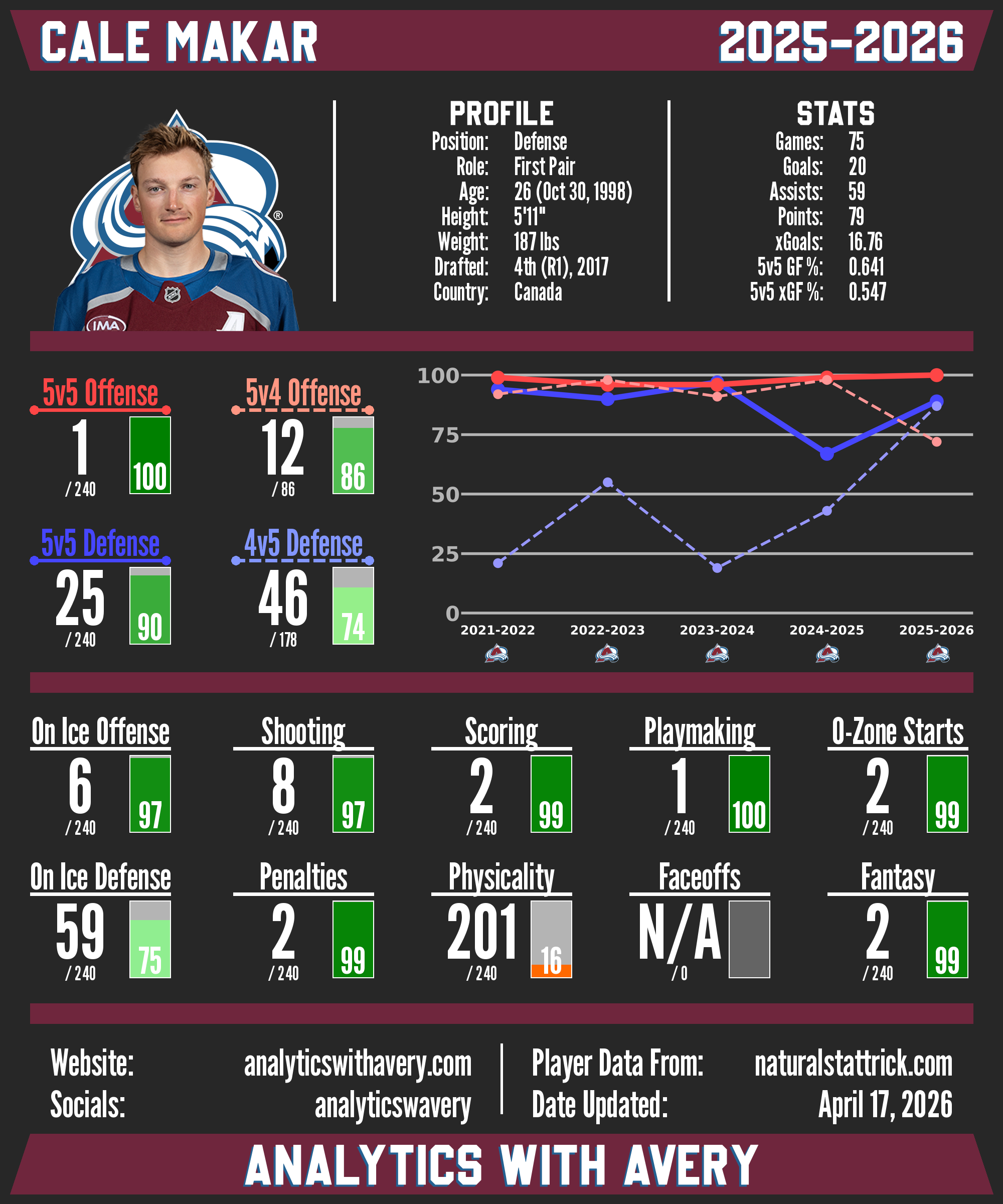
2 - Cale Makar
75 GP, 24:51 Avg. TOI
20 G, 28 A1, 31 A2, 79 P
64.10 5v5 GF%, 54.69 5v5 xGF%
23 Penalties Drawn, 12 Penalties Taken
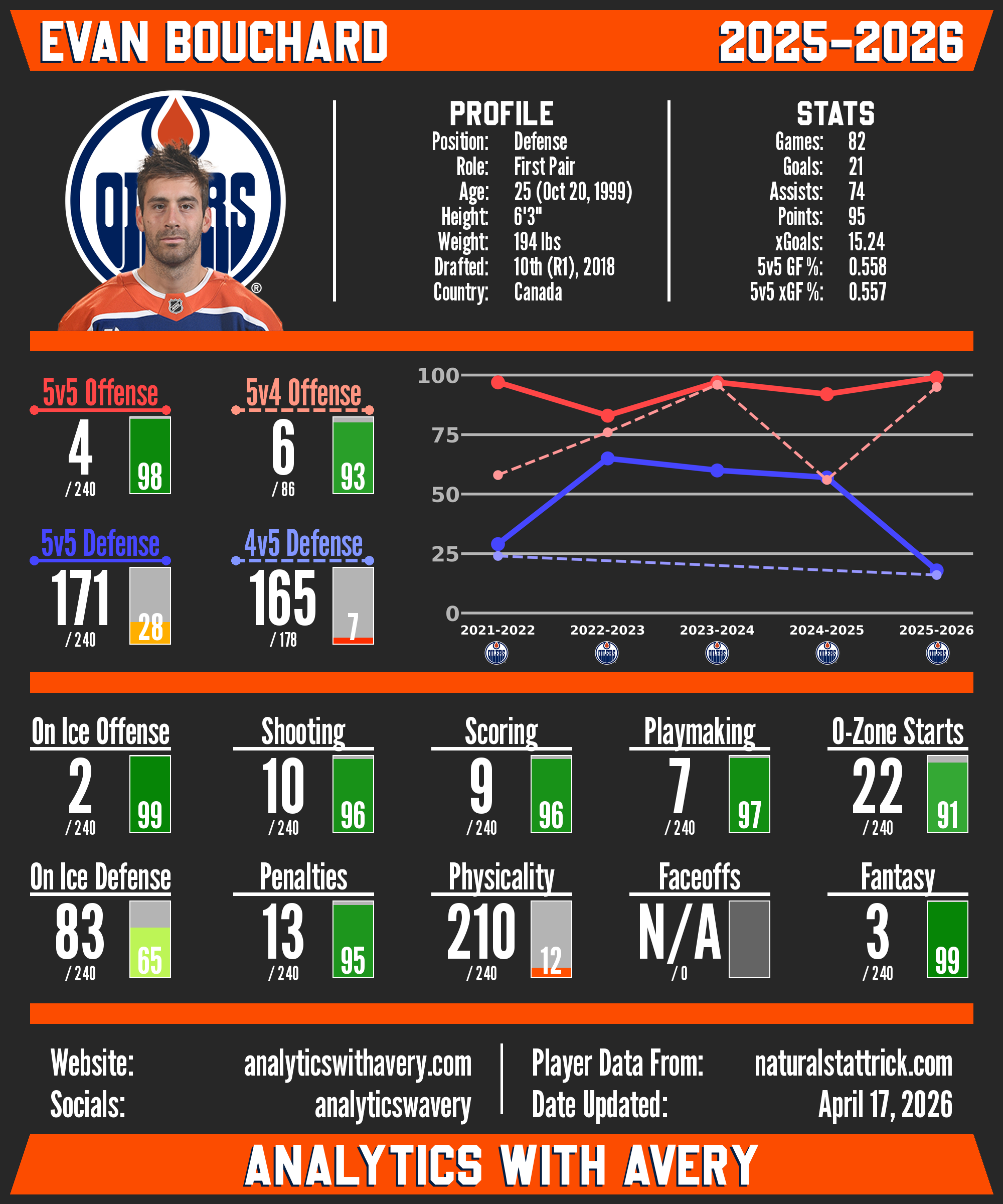
3 - Evan Bouchard
82 GP, 24:41 Avg. TOI
21 G, 33 A1, 41 A2, 95 P
55.77 5v5 GF%, 55.67 5v5 xGF%
17 Penalties Drawn, 15 Penalties Taken
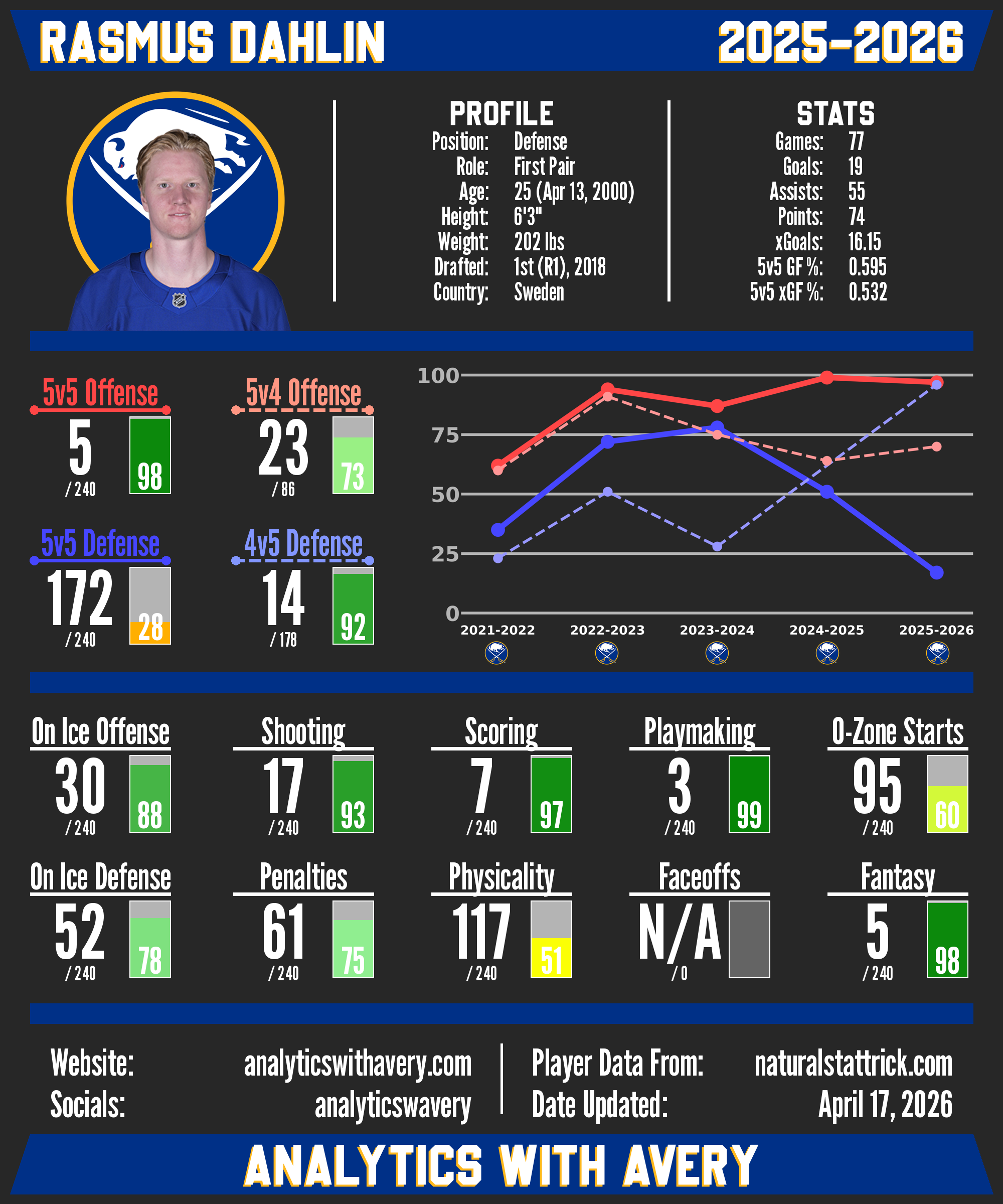
4 - Rasmus Dahlin
77 GP, 24:11 Avg. TOI
19 G, 26 A1, 29 A2, 74 P
59.54 5v5 GF%, 53.23 5v5 xGF%
26 Penalties Drawn, 31 Penalties Taken
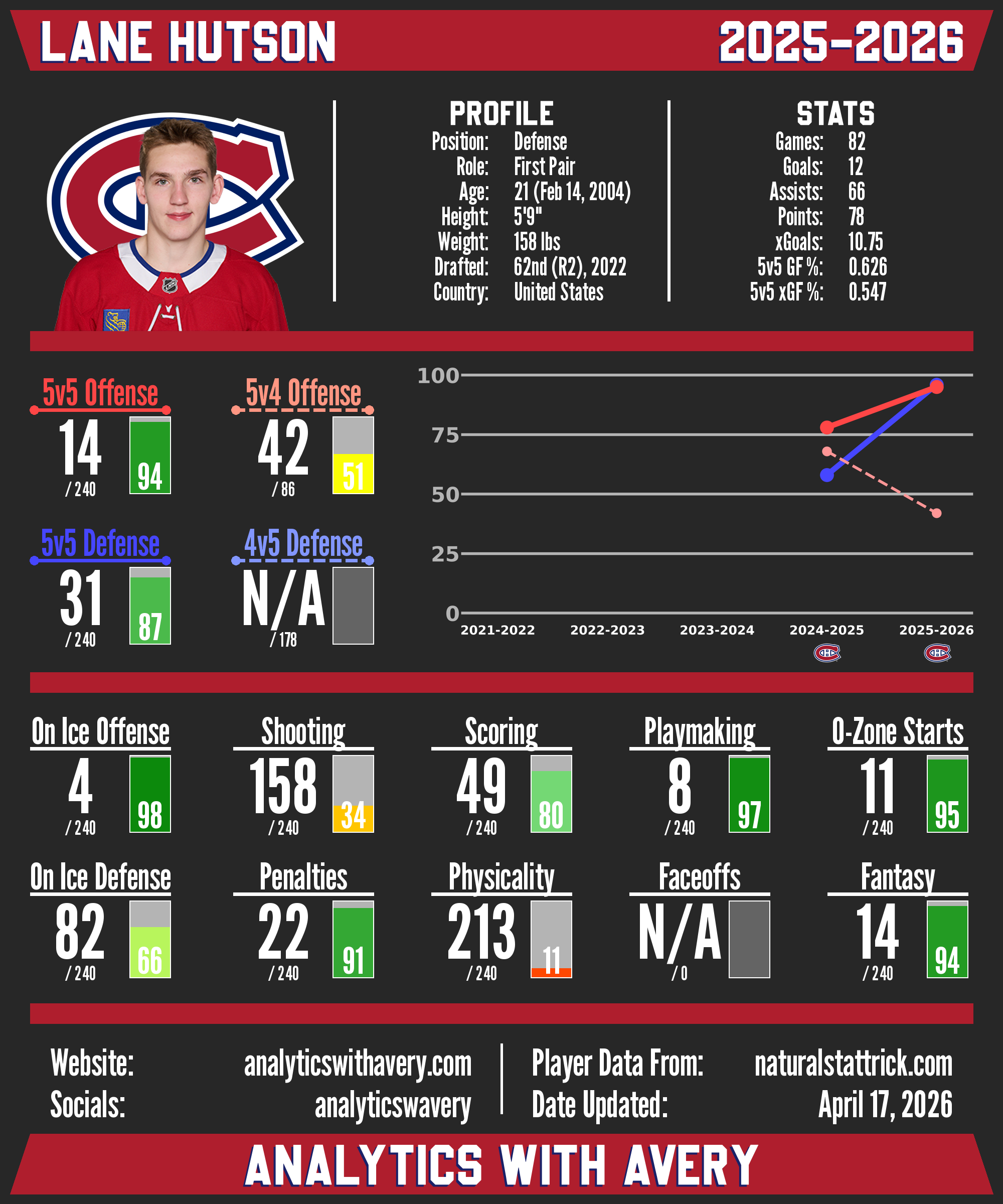
5 - Lane Hutson
82 GP, 23:46 Avg. TOI
12 G, 33 A1, 36 A2, 78 P
62.59 5v5 GF%, 54.75 5v5 xGF%
22 Penalties Drawn, 17 Penalties Taken
Thoughts
As mentioned in the Hart discussion, I have Zach Werenski taking home the Norris. I think he and Cale Makar had very similar seasons, but Werenski gets the edge because he played almost two more minutes per game and had to be more of a driving force on a weaker Columbus team. Evan Bouchard also had a very strong offensive case, but his league-leading 95 points are slightly inflated by 10 more secondary assists than my top two picks, along with 49 of those points coming on the power play, compared to 34 for Werenski and 40 for Makar.
Rasmus Dahlin captained the Sabres to a playoff berth for the first time in 14 years. He ranked fifth among defensemen in points and fourth in even-strength points, while also bringing more physicality than the other nominees. Lane Hutson took significant steps defensively while continuing to develop offensively. Something the numbers don’t fully capture is just how dynamic his skating is. Anyone who has watched him play can see that, and I have no doubt he’ll be in the Norris conversation in the near future.
The Vezina
"The Vezina Trophy is an annual award given to the goalkeeper adjudged to be the best at this position."
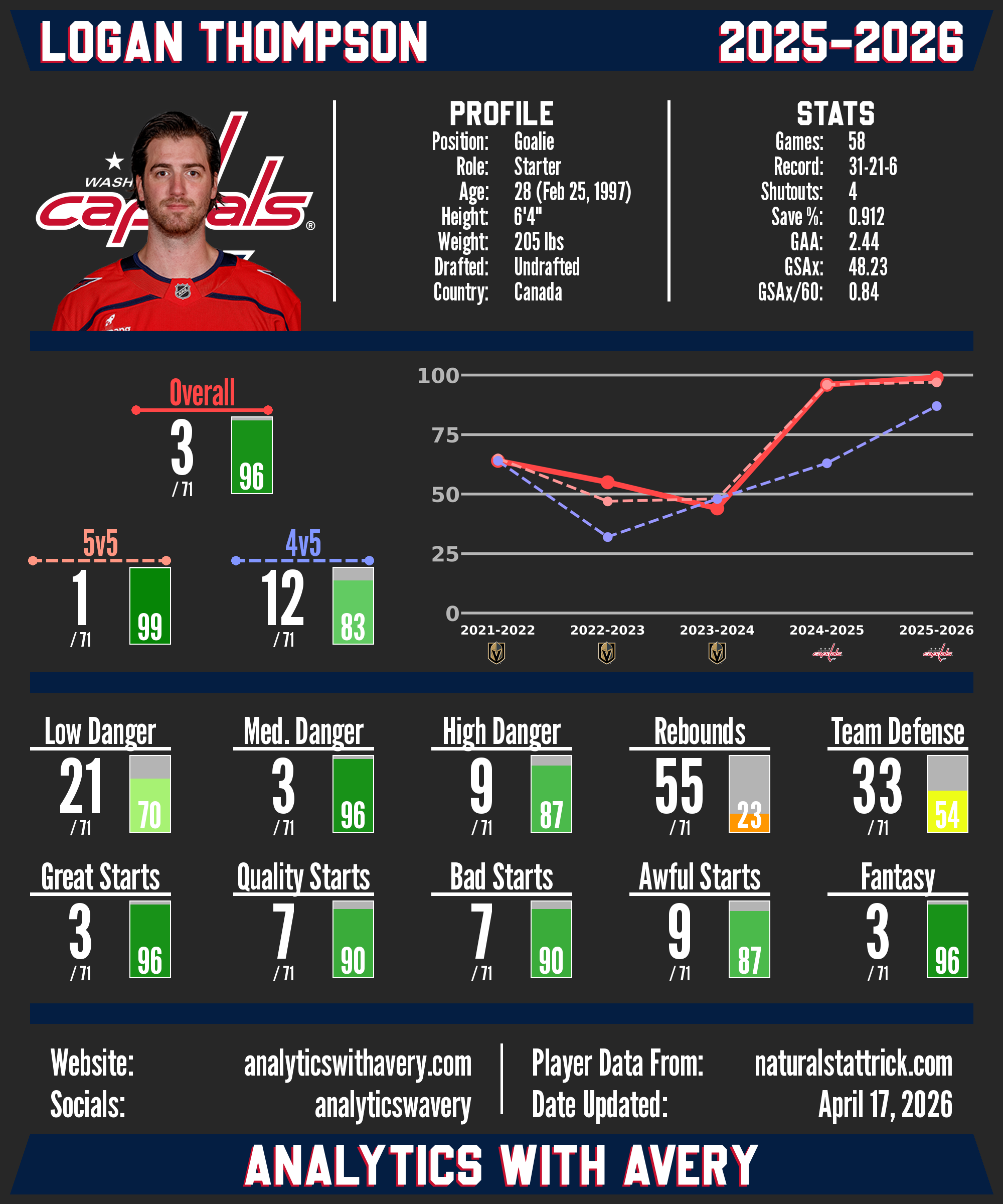
1 - Logan Thompson
58 GP, 31 W, 21 L, 6 OTL
0.912 SV%, 2.44 GAA, 0.84 GSAx/60
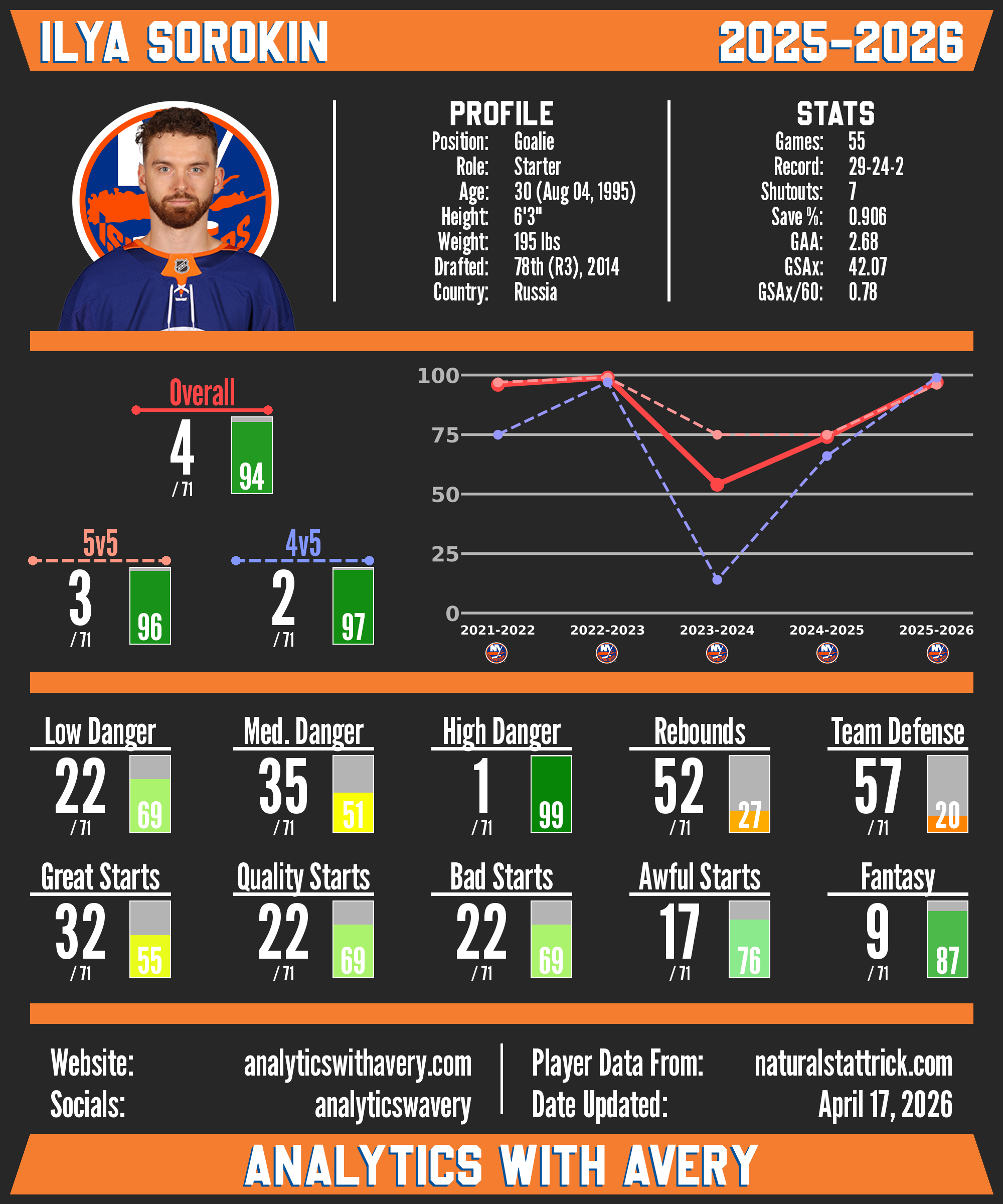
2 - Ilya Sorokin
55 GP, 29 W, 24 L, 1 OTL
0.906 SV%, 2.68 GAA, 0.78 GSAx/60
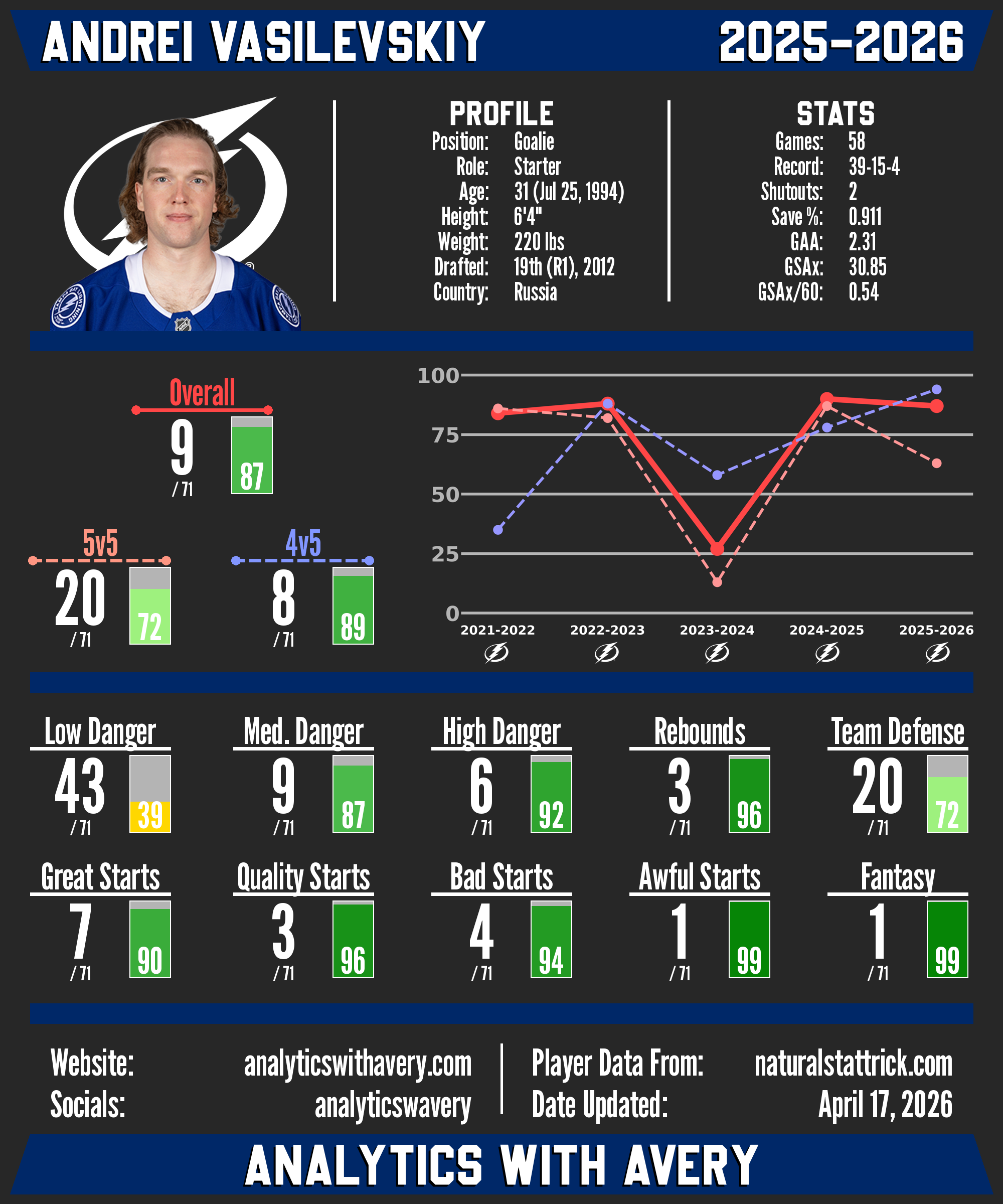
3 - Andrei Vasilevskiy
58 GP, 39 W, 15 L, 4 OTL
0.911 SV%, 2.31 GAA, 0.54 GSAx/60
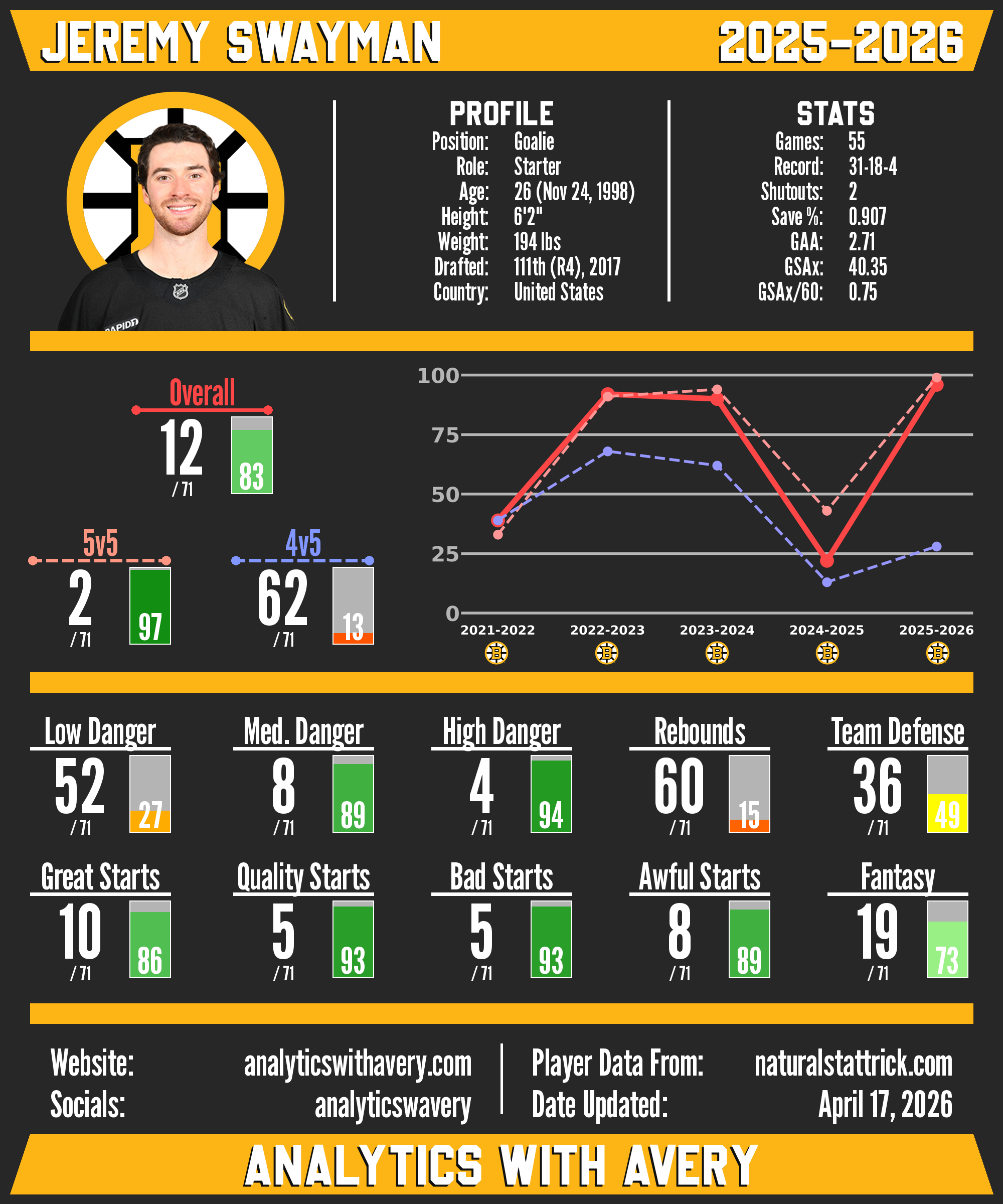
4 - Jeremy Swayman
55 GP, 31 W, 18 L, 4 OTL
0.907 SV%, 2.71 GAA, 0.75 GSAx/60
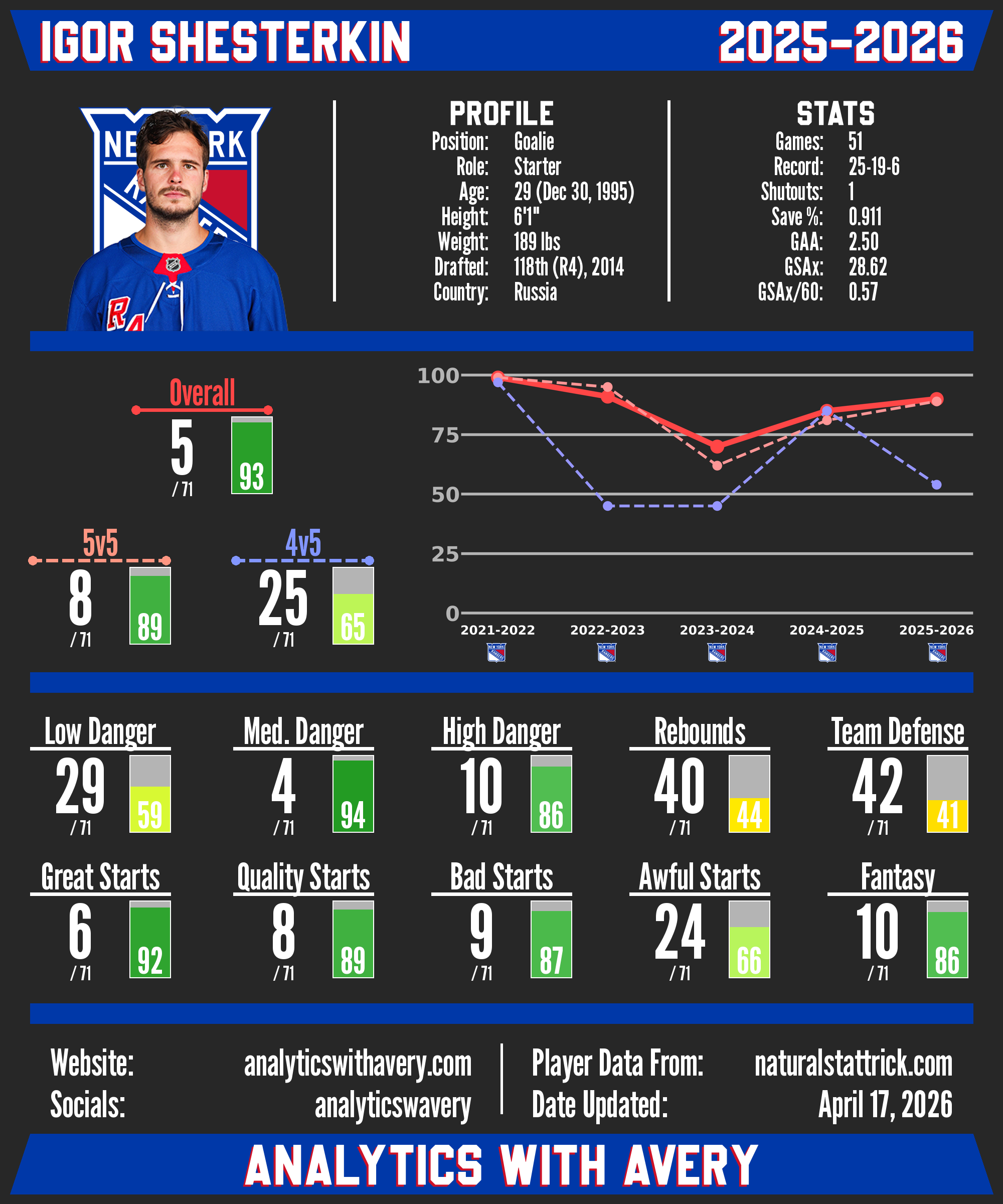
5 - Igor Shesterkin
51 GP, 25 W, 19 L, 6 OTL
0.911 SV%, 2.50 GAA, 0.57 GSAx/60
Thoughts
For the Vezina, many traditional goalie stats are heavily influenced by the quality of the team in front of the net. For this analysis, I focused primarily on goals saved above expected (GSAx) and on goaltenders who handled a large workload (over 50 games played). Ilya Sorokin was close, and I would argue he had the weakest team in front of him, one that stayed in the playoff race much longer than expected, largely because of his elite season. Andrei Vasilevskiy had by far the most impressive record, earning 82 points in the standings for a Tampa team that made many of his nights easier. His numbers were still excellent, but his GSAx/60 wasn’t quite as strong as the two goaltenders ranked ahead of him.
Jeremy Swayman had an impressive bounce-back season and was a major reason for the Bruins’ return to the playoffs, boasting a 0.75 GSAx/60. Igor Shesterkin also had a strong year, but the Rangers didn’t provide the same level of support or results to help him be considered a top three Vezina candidate.
The Frank J. Selke
"The Frank J. Selke Trophy is an annual award given to the forward who best excels in the defensive aspects of the game."
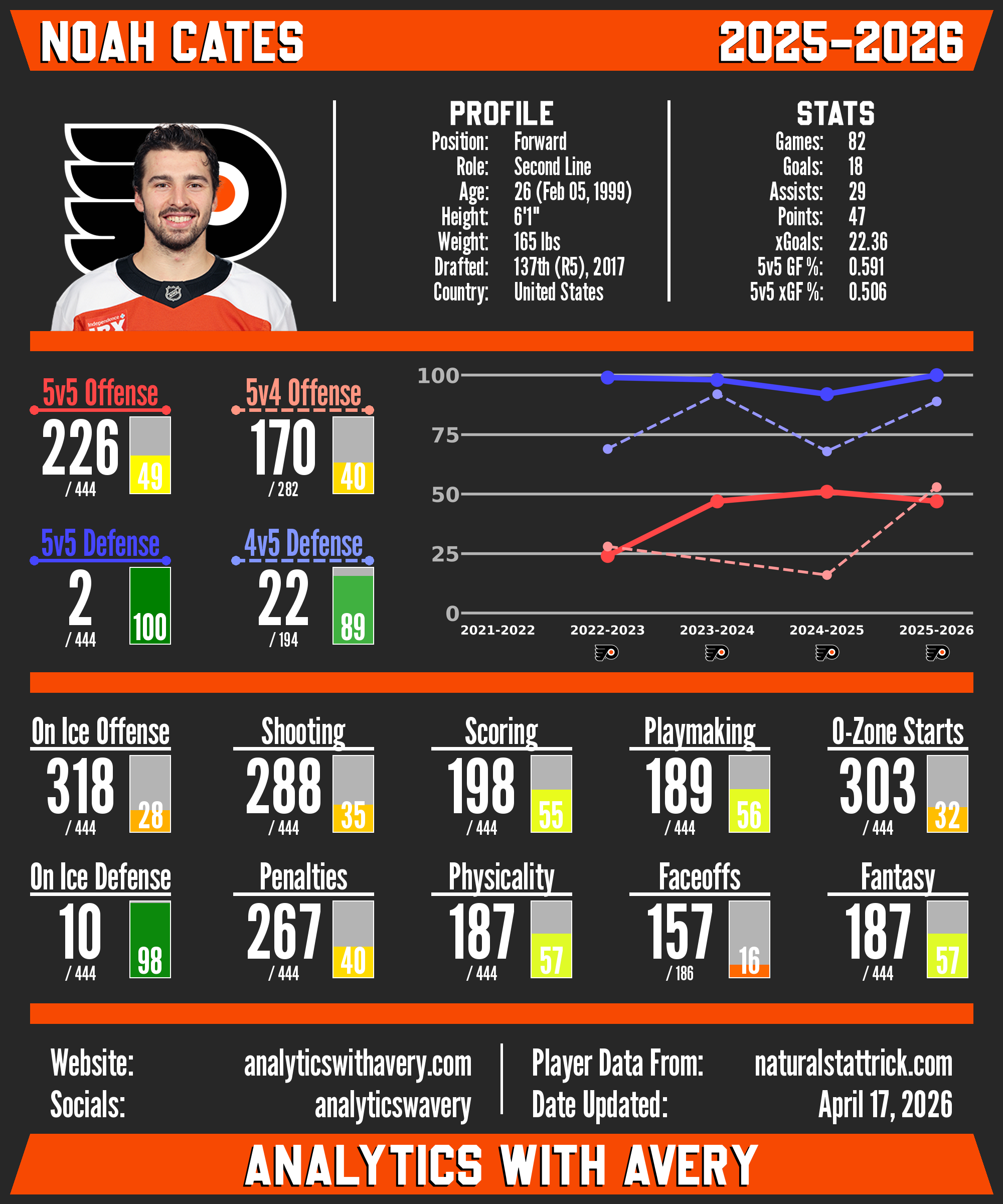
1 - Noah Cates
82 GP, 16:15 Avg. TOI
1.67 5v5 GA/60, 2.16 5v5 xGA/60
59.09 5v5 GF%, 50.59 5v5 xGF%
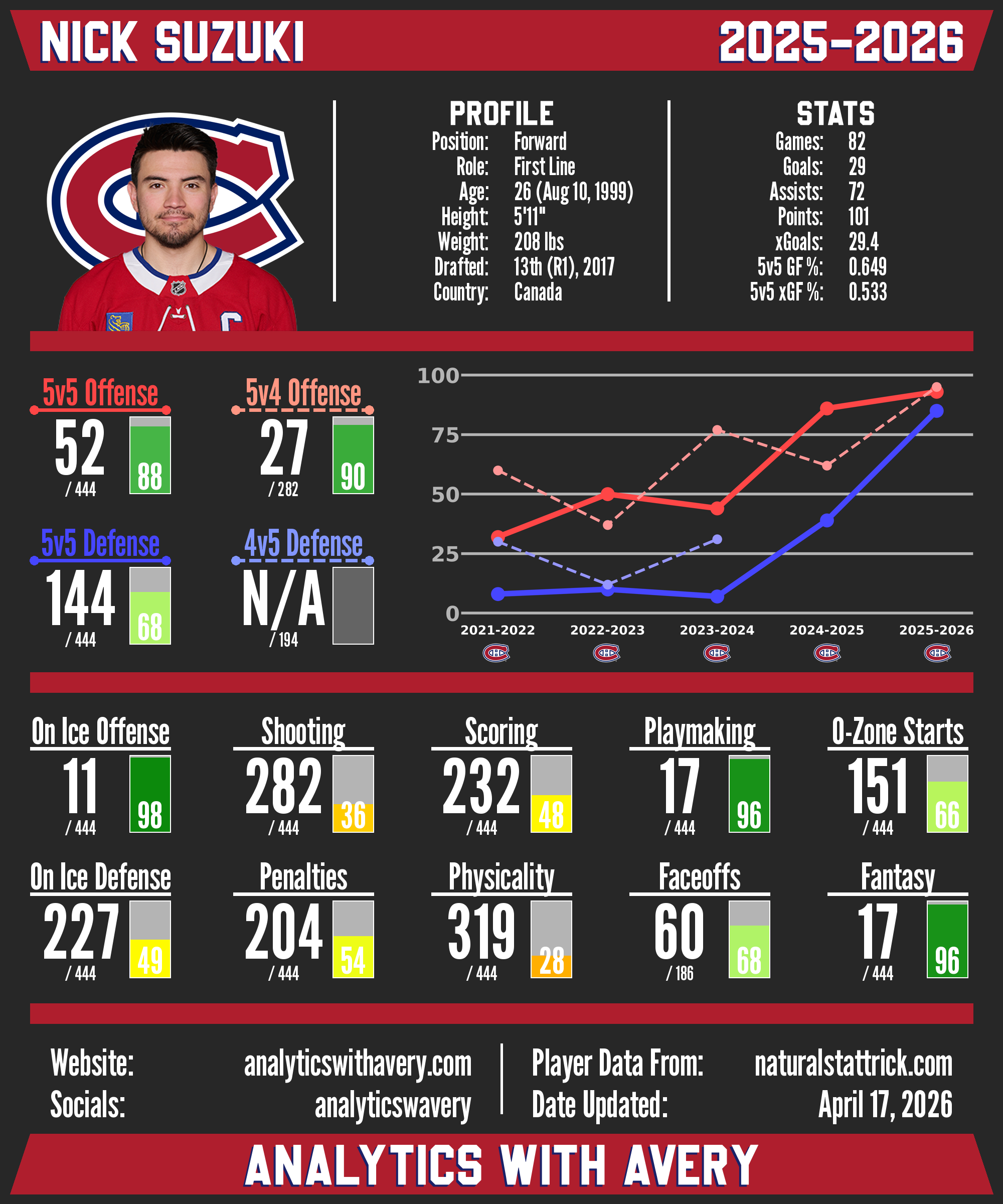
2 - Nick Suzuki
82 GP, 20:49 Avg. TOI
1.94 5v5 GA/60, 2.69 5v5 xGA/60
64.86 5v5 GF%, 53.32 5v5 xGF%
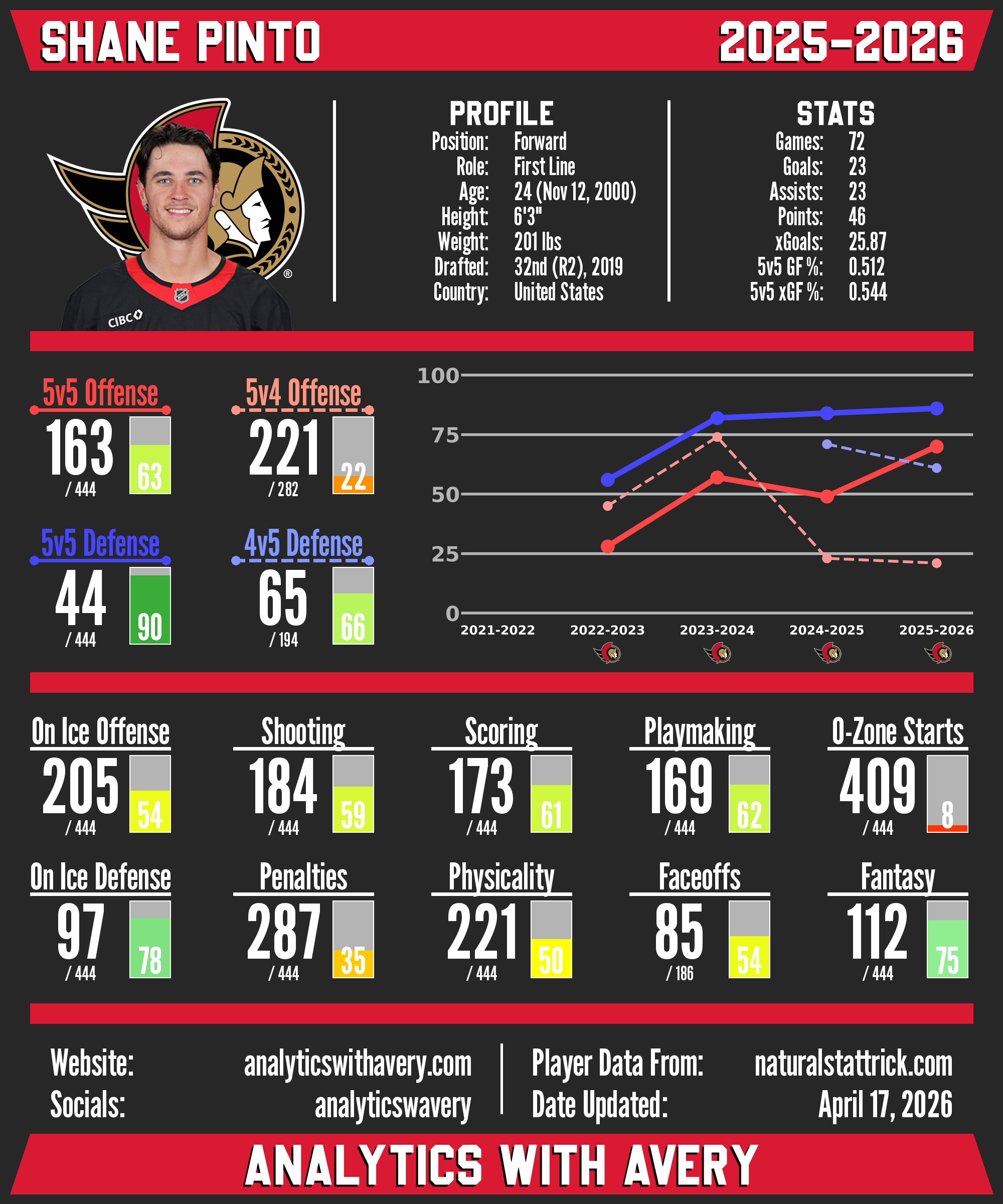
3 - Shane Pinto
72 GP, 18:43 Avg. TOI
2.62 5v5 GA/60, 2.29 5v5 xGA/60
51.16 5v5 GF%, 54.39 5v5 xGF%
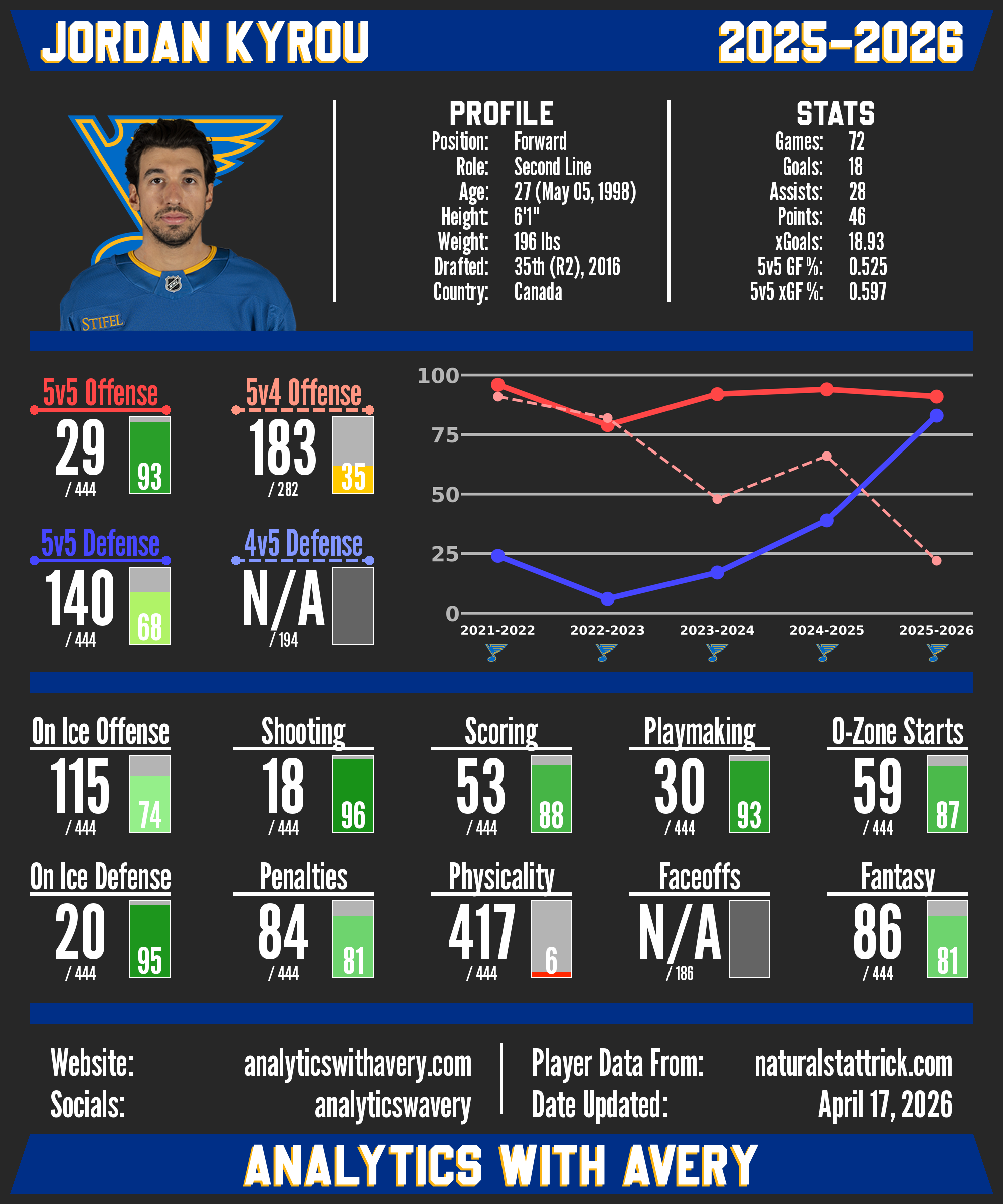
4 - Jordan Kyrou
72 GP, 15:44 Avg. TOI
2.47 5v5 GA/60, 2.11 5v5 xGA/60
52.50 5v5 GF%, 59.74 5v5 xGF%
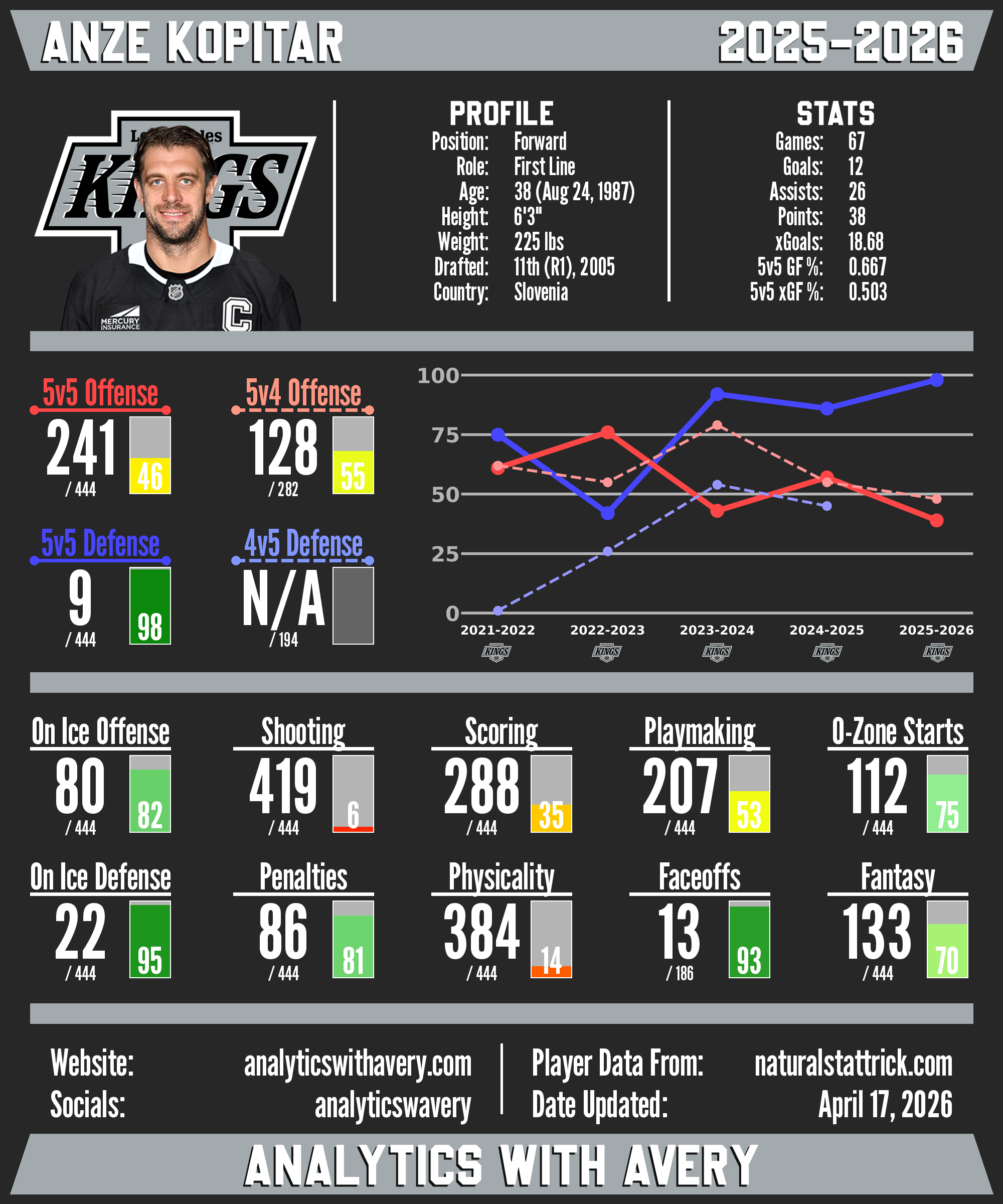
5 - Anze Kopitar
67 GP, 19:07 Avg. TOI
1.51 5v5 GA/60, 2.41 5v5 xGA/60
47.71 5v5 GF%, 52.37 5v5 xGF%
Thoughts
The Selke is often a divisive award. Defensive impact is much harder to measure than offensive production, and the award has historically favoured star players, even though others lower in the lineup may have stronger defensive results. Because of this, I focused on identifying the top six forwards with the best overall defensive performance. I think Nick Suzuki is the most likely player to win the award, but my pick is Noah Cates. He was a defensive monster this season, posting an elite 1.67 GA/60 while also contributing on the penalty kill – something not all of these candidates can claim. Suzuki still deserves the recognition he’ll receive, as his defensive game is now strongly supported by the underlying numbers.
Shane Pinto rounds out my top three with well-rounded defensive metrics and strong penalty-kill contributions on a top ten penalty kill in the league. Jordan Kyrou had an unexpectedly strong defensive season, limiting his expected GA/60 to 2.11, although St. Louis’ weaker goaltending prevented those results from fully translating. Anze Kopitar was also excellent defensively, posting an even lower 1.51 5v5 GA/60 than Cates, but his case is slightly limited by missing time, as he played only 67 games this season.
The Calder Memorial
"An annual award given to the player selected as the most proficient in his first year of competition in the NHL."
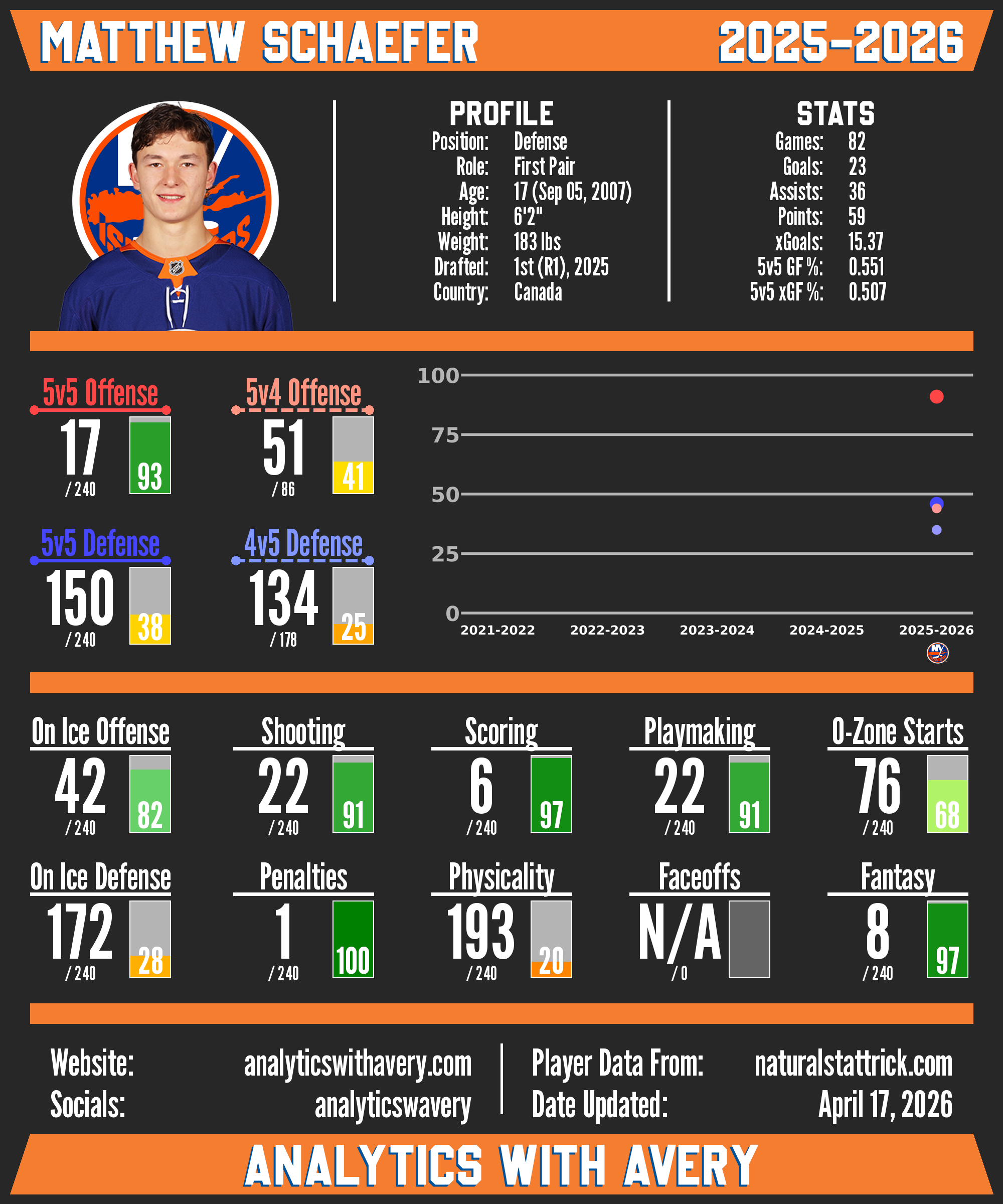
1 - Matthew Schaefer
82 GP, 24:41 Avg. TOI
23 G, 17 A1, 19 A2, 59 P
55.12 5v5 GF%, 50.66 5v5 xGF%
38 Penalties Drawn, 19 Penalties Taken
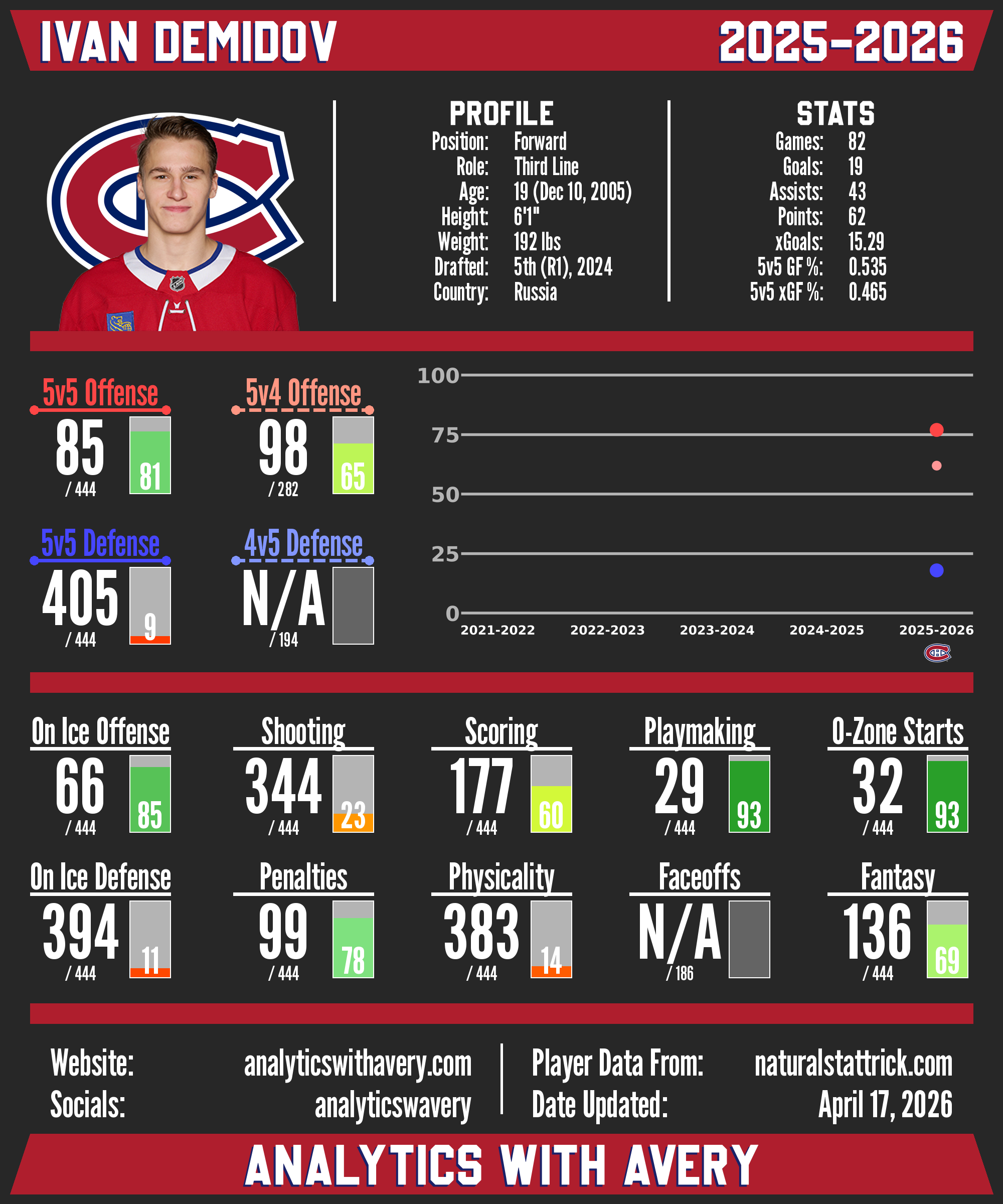
2 - Ivan Demidov
82 GP, 15:30 Avg. TOI
19 G, 26 A1, 17 A2, 62 P
53.54 5v5 GF%, 46.46 5v5 xGF%
18 Penalties Drawn, 17 Penalties Taken
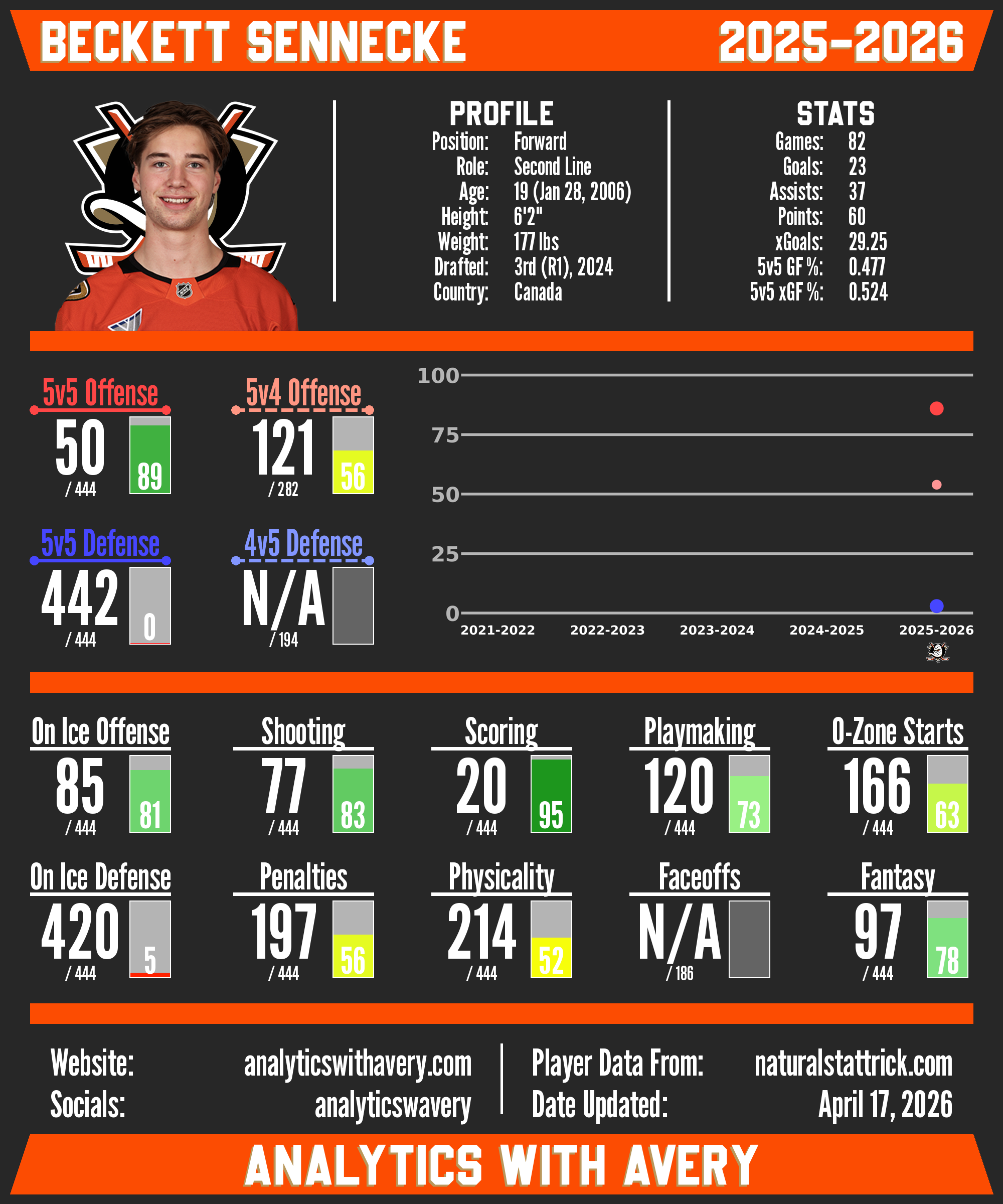
3 - Beckett Sennecke
82 GP, 17:27 Avg. TOI
23 G, 21 A1, 16 A2, 60 P
47.71 5v5 GF%, 52.37 5v5 xGF%
34 Penalties Drawn, 31 Penalties Taken
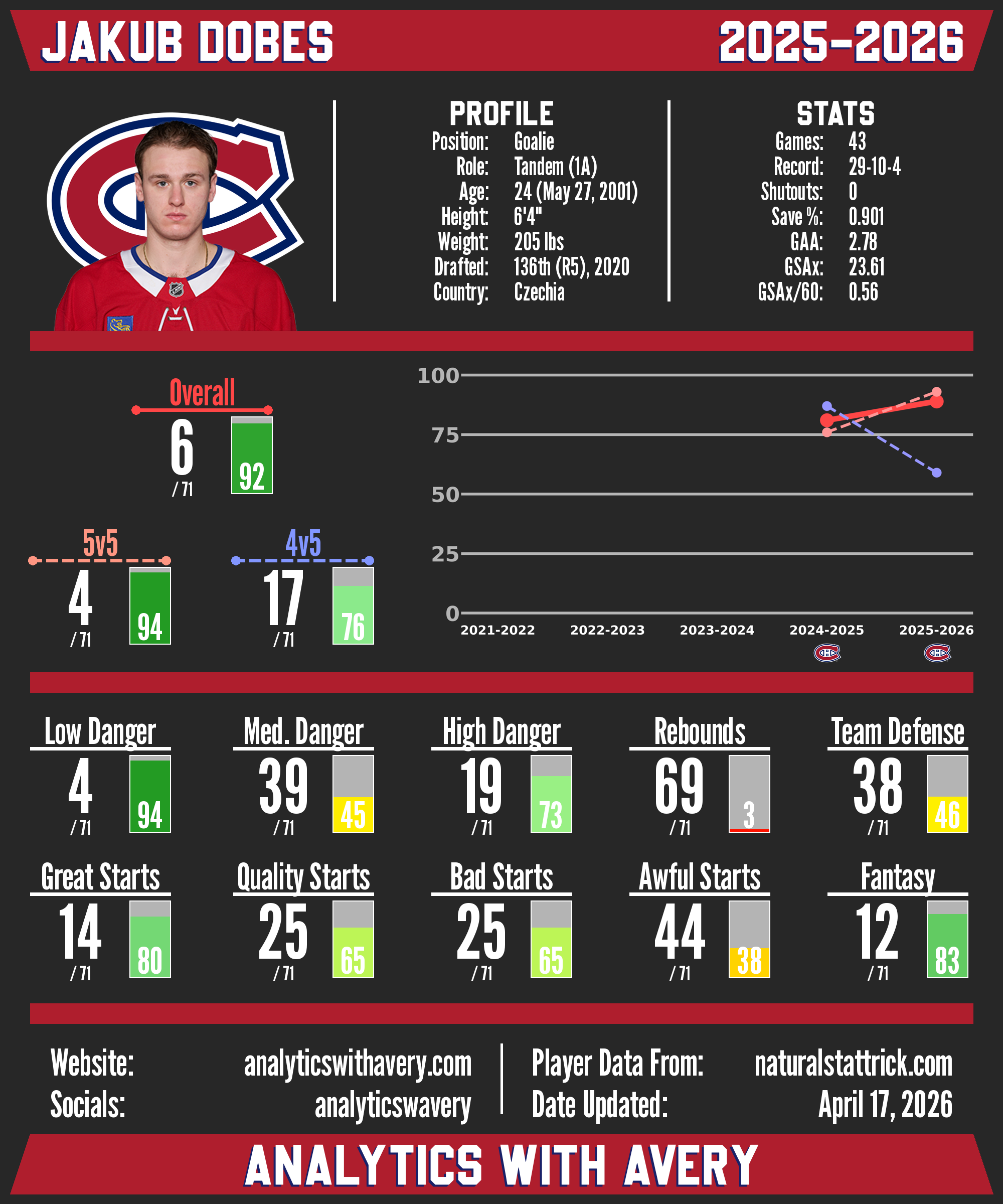
4 - Jakub Dobes
43 GP, 29 W, 10 L, 4 OTL
0.902 SV%, 2.78 GAA, 0.56 GSAx/60
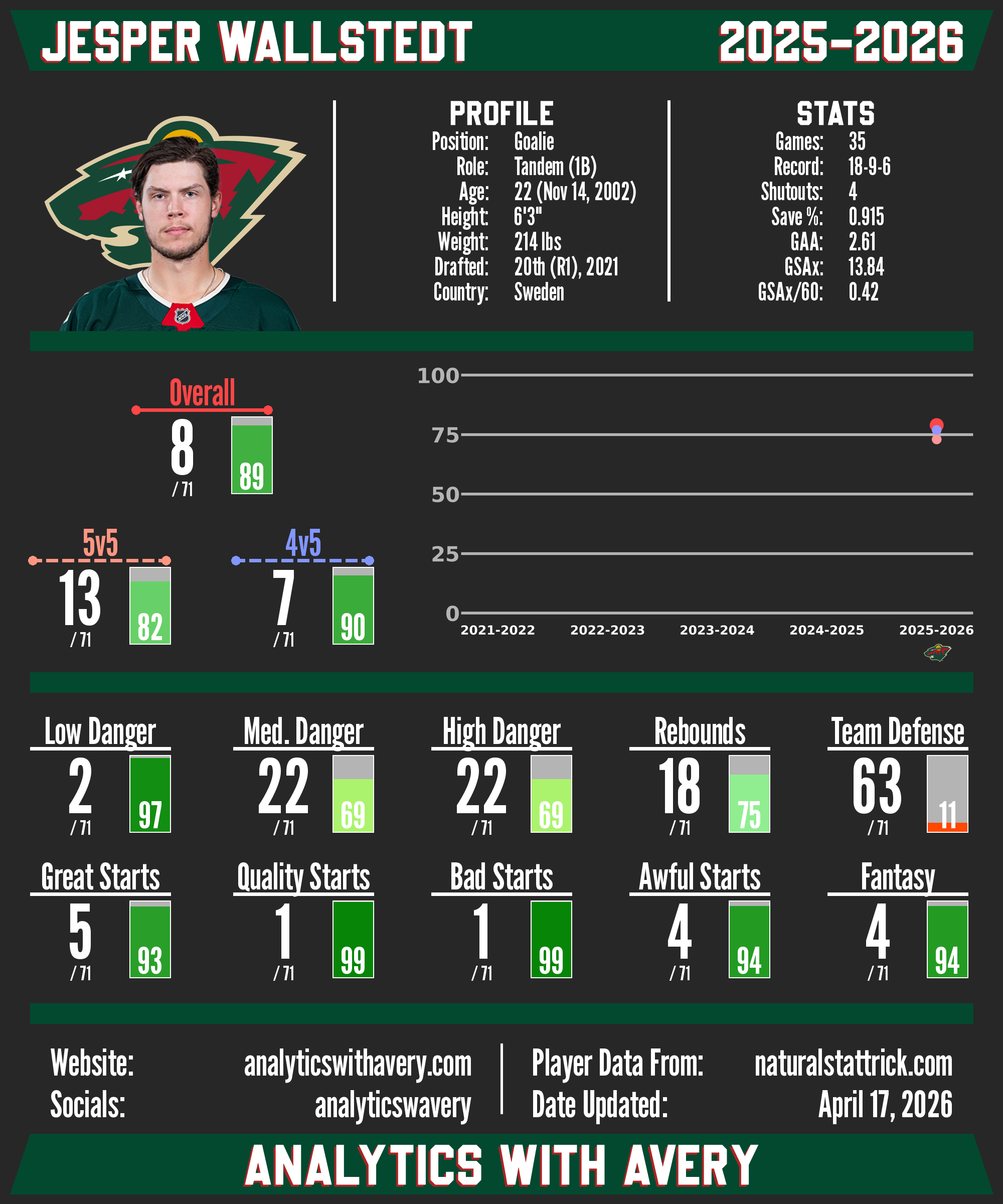
5 - Jesper Wallstedt
35 GP, 18 W, 9 L, 6 OTL
0.916 SV%, 2.61 GAA, 0.42 GSAx/60
Thoughts
For most of the season, the Calder race felt all but decided, with the rest of the field competing for second place. First overall pick Matthew Schaefer entered the league as a 17-year-old and immediately made an impact, scoring 23 goals and 59 points while drawing the second-most penalties in the entire league. Ivan Demidov showed flashes of high-end offensive ability and looks like a player poised to take another major step forward. Beckett Sennecke was one of the biggest surprises of the season. After being viewed by some as a reach when selected third overall in 2024, he rewarded the Anaheim Ducks with a 60-point season and played a key role in helping the team reach the playoffs for the first time since 2018.
To round out the top five, I have two goaltenders: Jakub Dobes and Jesper Wallstedt. Both posted strong GSAx/60 numbers, with Dobes holding a slight edge while also delivering better overall results. His performance was especially valuable for a Montreal team that had uncertainty in net for the beginning of the season.
The Jack Adams
"Presented to the coach adjudged to have contributed the most to his team's success."
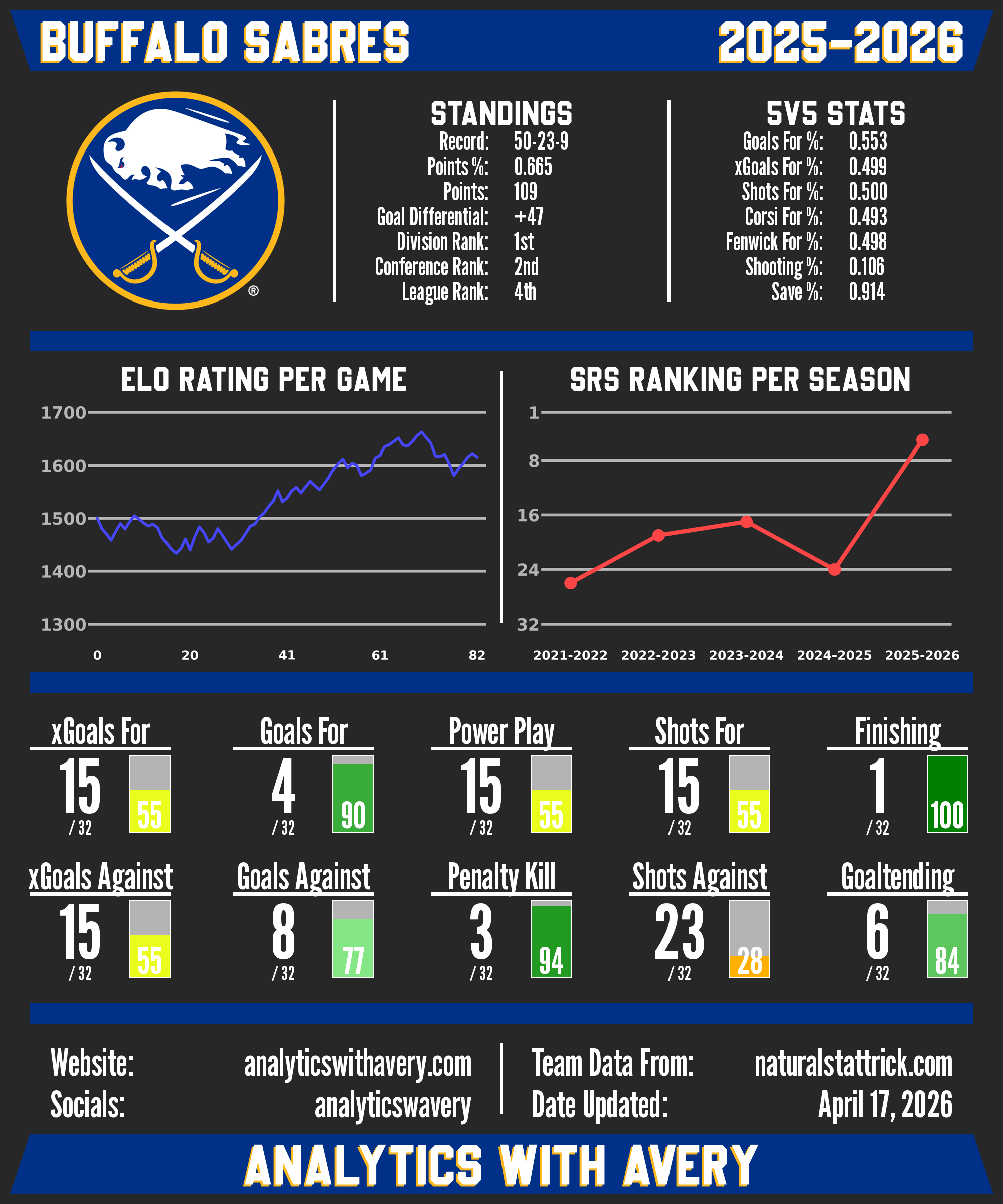
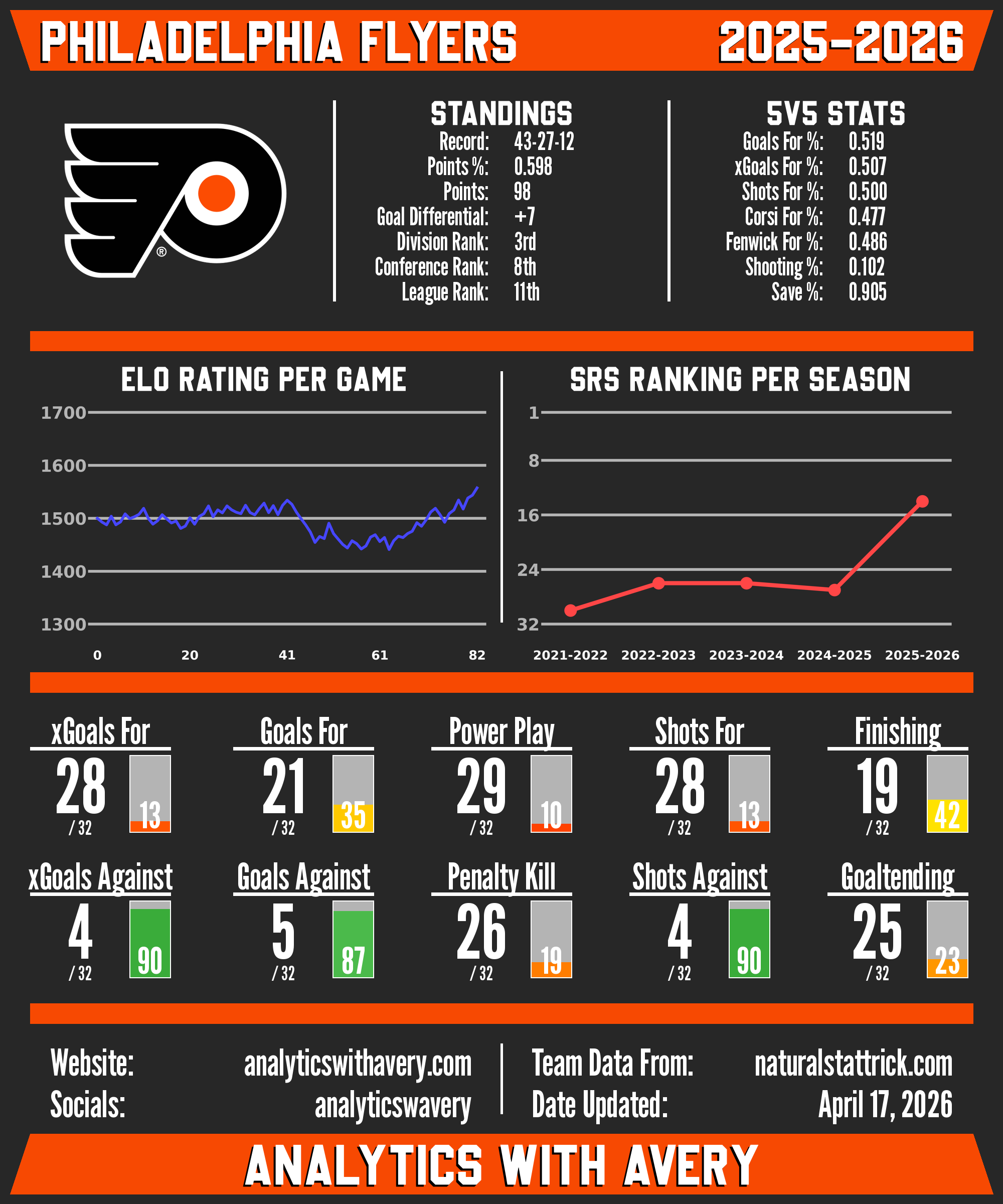
1 - Lindy Ruff, Buffalo Sabres
50 W, 23 L, 9 OTL, 109 PTS
This Season: 1st in the Atlantic, 4th Overall
Last Season: 7th in the Atlantic, 26th Overall
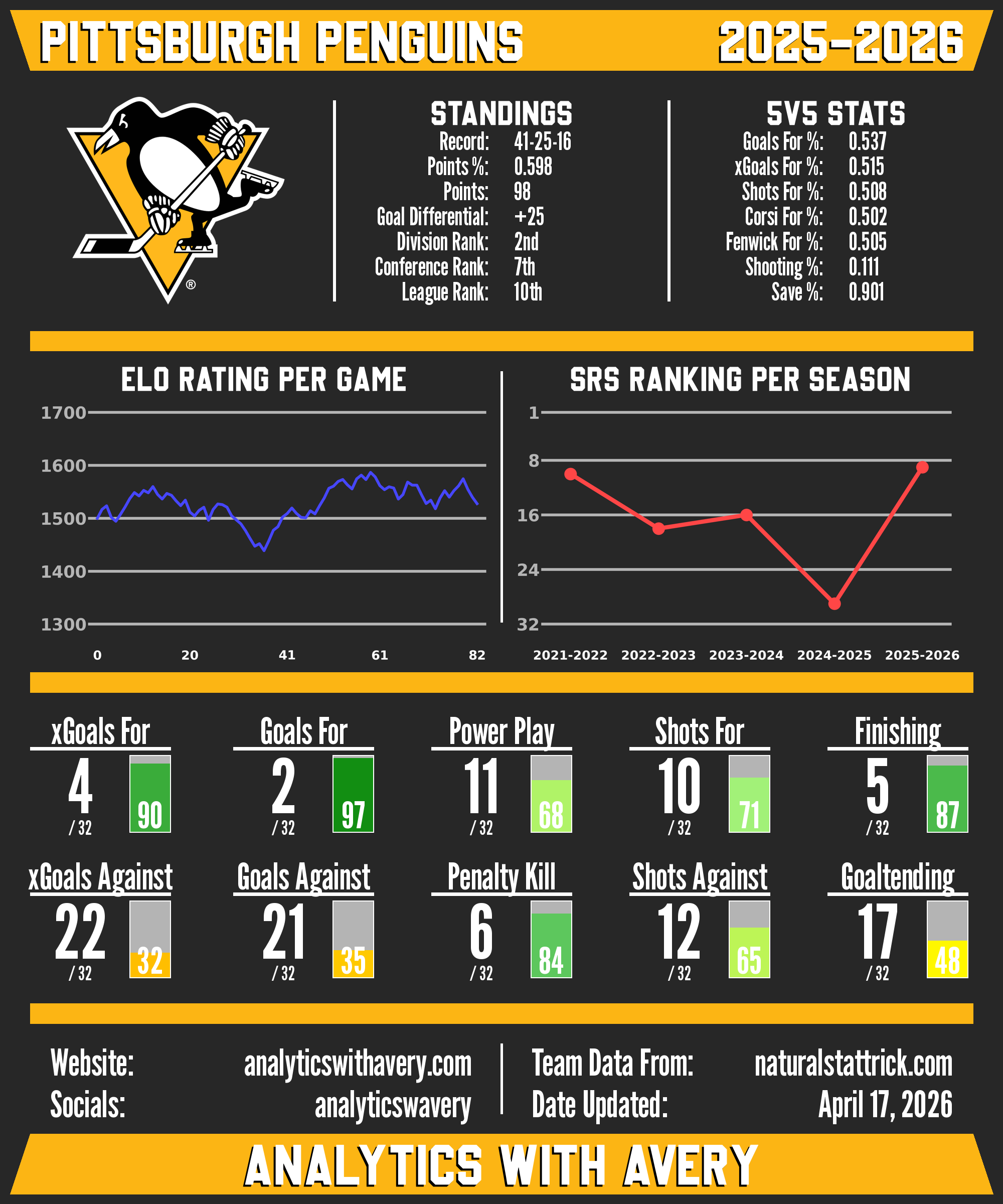
2 - Dan Muse, Pittsburgh Penguins
41 W, 25 L, 16 OTL, 98 PTS
This Season: 2nd in the Metropolitan, 10th Overall
Last Season: 7th in the Metropolitan, 24th Overall
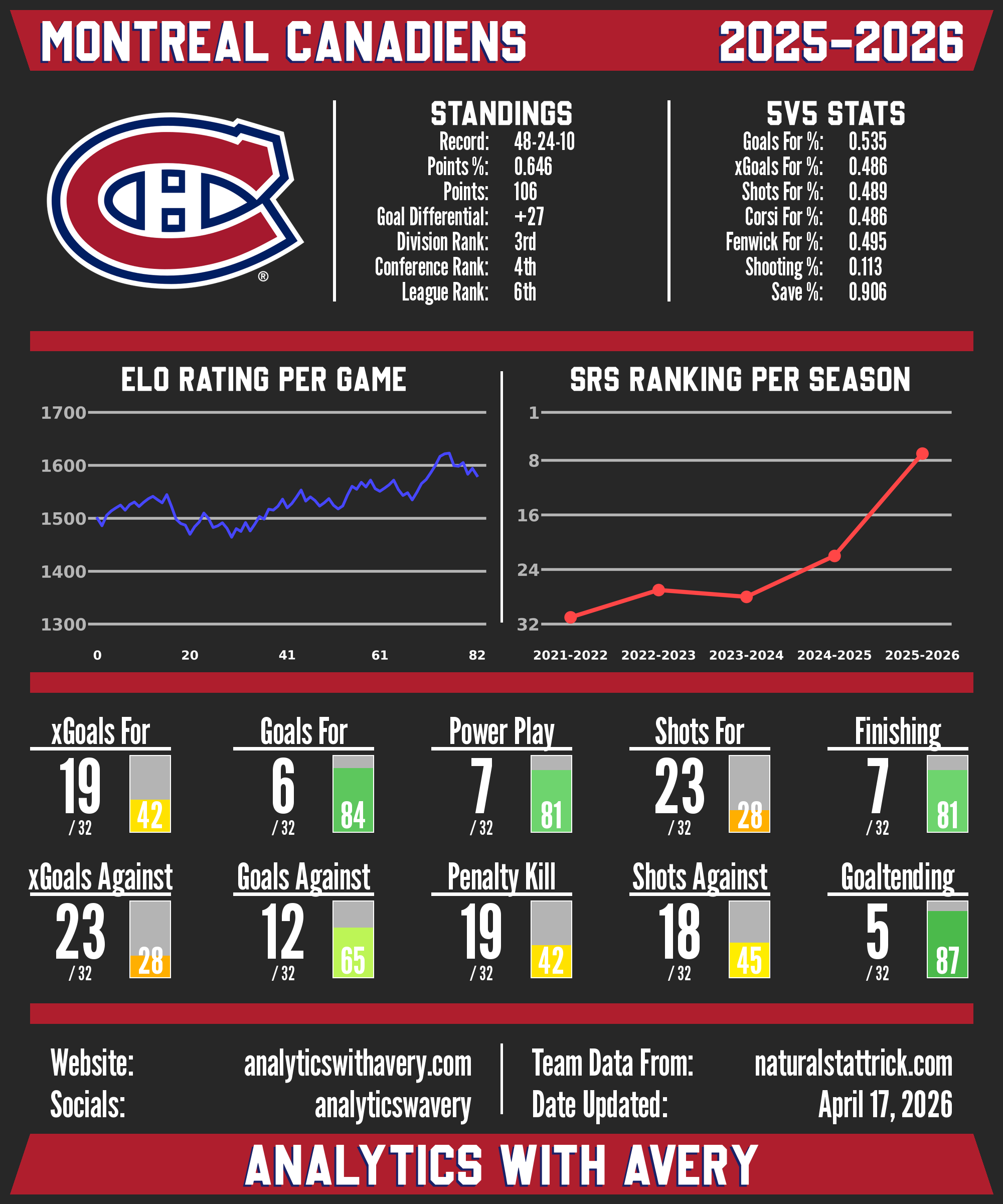
3 - Martin St. Louis, Montreal Canadiens
48 W, 24 L, 10 OTL, 106 PTS
This Season: 3rd in the Atlantic, 6th Overall
Last Season: 5th in the Atlantic, 17th Overall
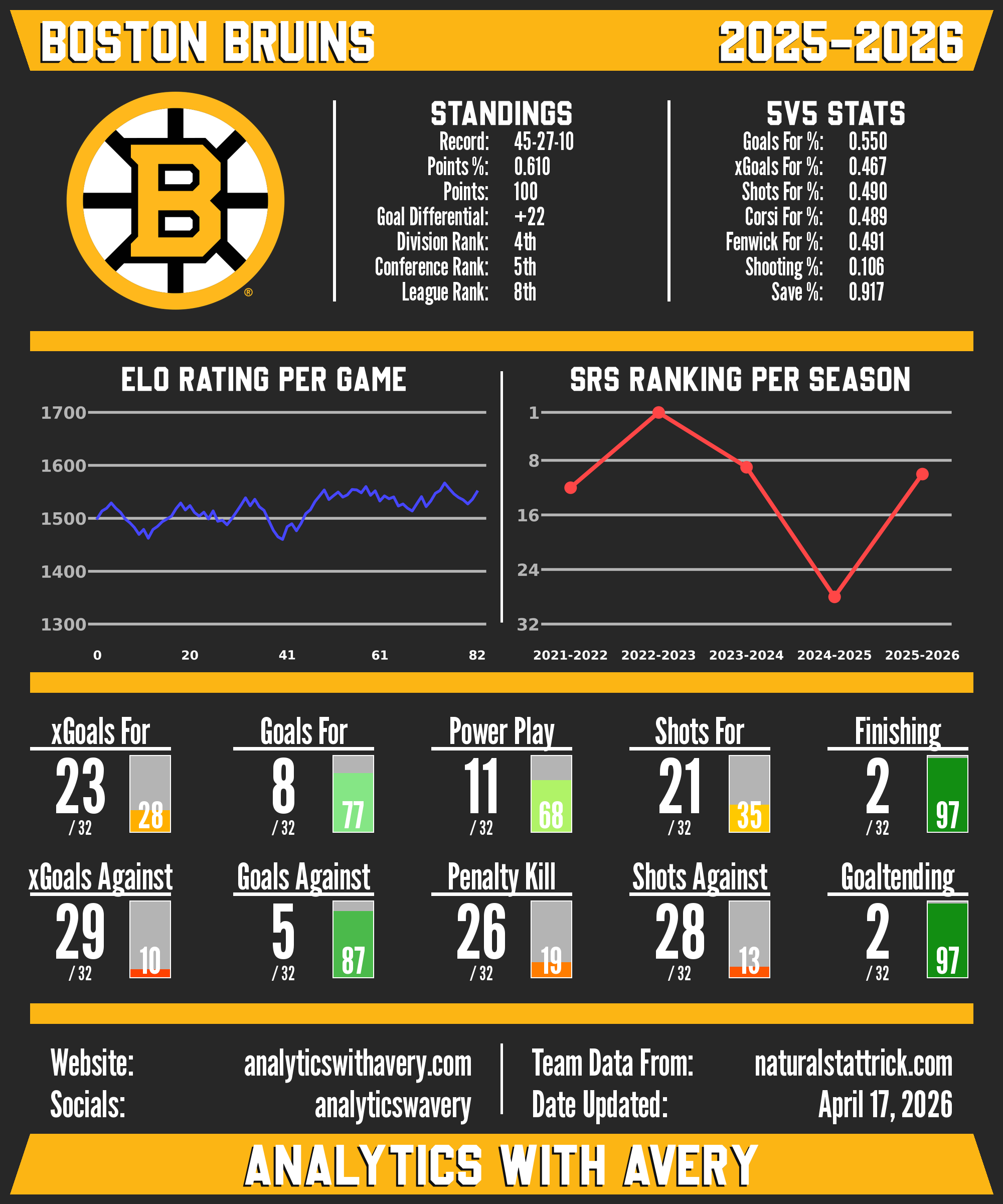
4 - Marco Sturm, Boston Bruins
45 W, 27 L, 10 OTL, 100 PTS
This Season: 4th in the Atlantic, 8th Overall
Last Season: 8th in the Atlantic, 28th Overall
5 - Rick Tocchet, Philadelphia Flyers
43 W, 27 L, 12 OTL, 98 PTS
This Season: 3rd in the Metropolitan, 11th Overall
Last Season: 8th in the Metropolitan, 29th Overall
Thoughts
The Jack Adams is a difficult award to evaluate. It is meant to be given to the best coach in the league, but defining what that actually means is far from straightforward. Unlike players, whose performance can be measured through statistics and on-ice results, much of a coach’s impact happens behind the scenes, making it harder to quantify. Because of this, the award is often interpreted as recognizing the team that exceeded expectations or improved the most from the previous season. If this is the case, Lindy Ruff gets my pick. The Buffalo Sabres made one of the biggest and long-awaited jumps in the league, going from near the bottom of the standings last season to one of the top teams this year.
Dan Muse also deserves significant recognition, earning my second place vote. Many expected the Pittsburgh Penguins to be a lottery team, but they instead finished second in the Metropolitan Division, far exceeding expectations. In third, Martin St. Louis continues to establish himself as one of the league’s top developmental coaches, guiding a young Montreal Canadiens roster to a finish just outside the top five in the league.
Marco Sturm helped coach the Boston Bruins to a strong bounce-back season after finishing near the bottom of the league last year with a largely similar roster. Meanwhile, Rick Tocchet has continued to solidify his reputation as one of the best defensive coaches in the NHL, leading the Philadelphia Flyers to a top five goals-against finish and a 22-point improvement in the standings.
The Jim Gregory
"An annual award presented to recognize the work of the top general manager in the NHL."
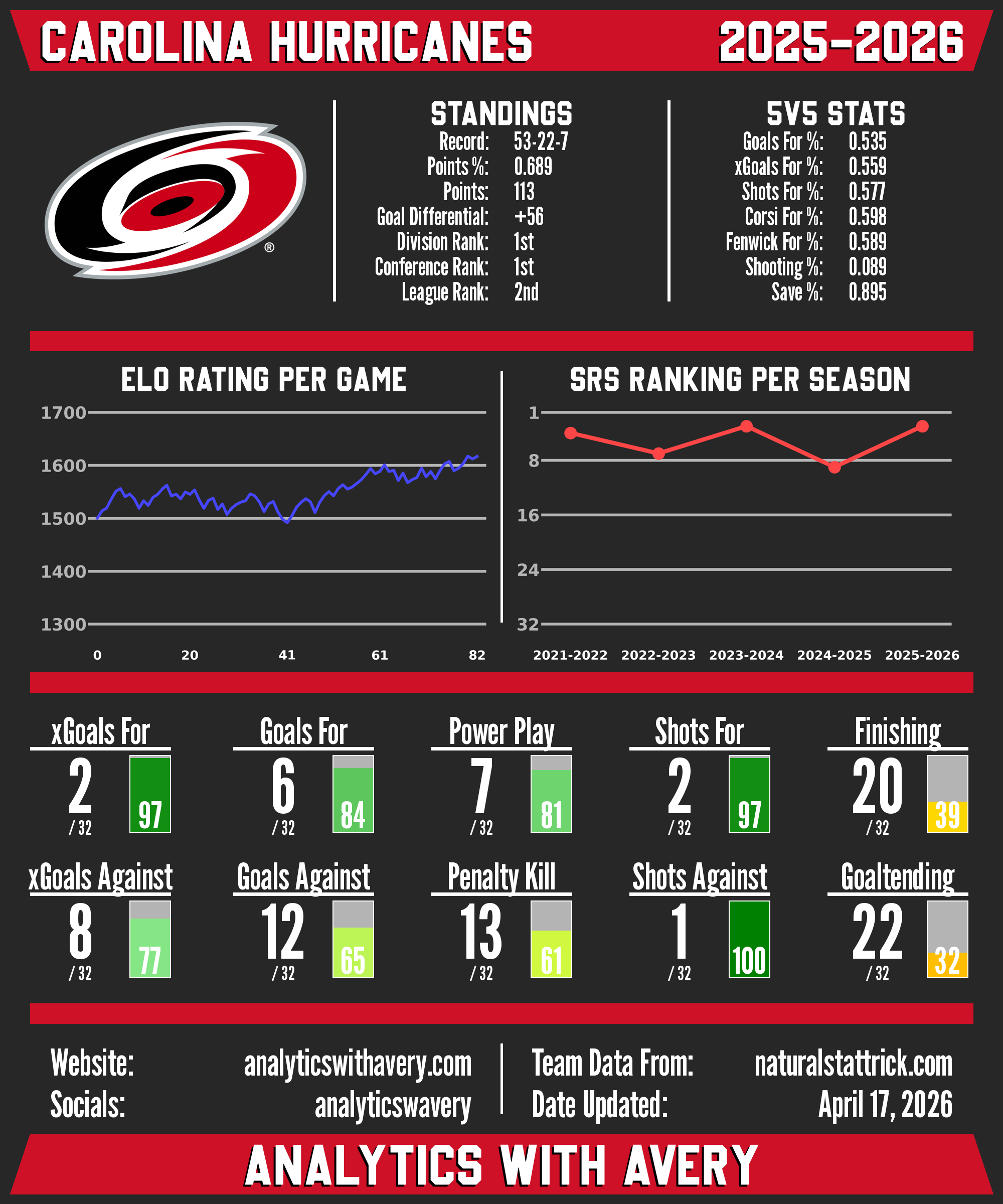
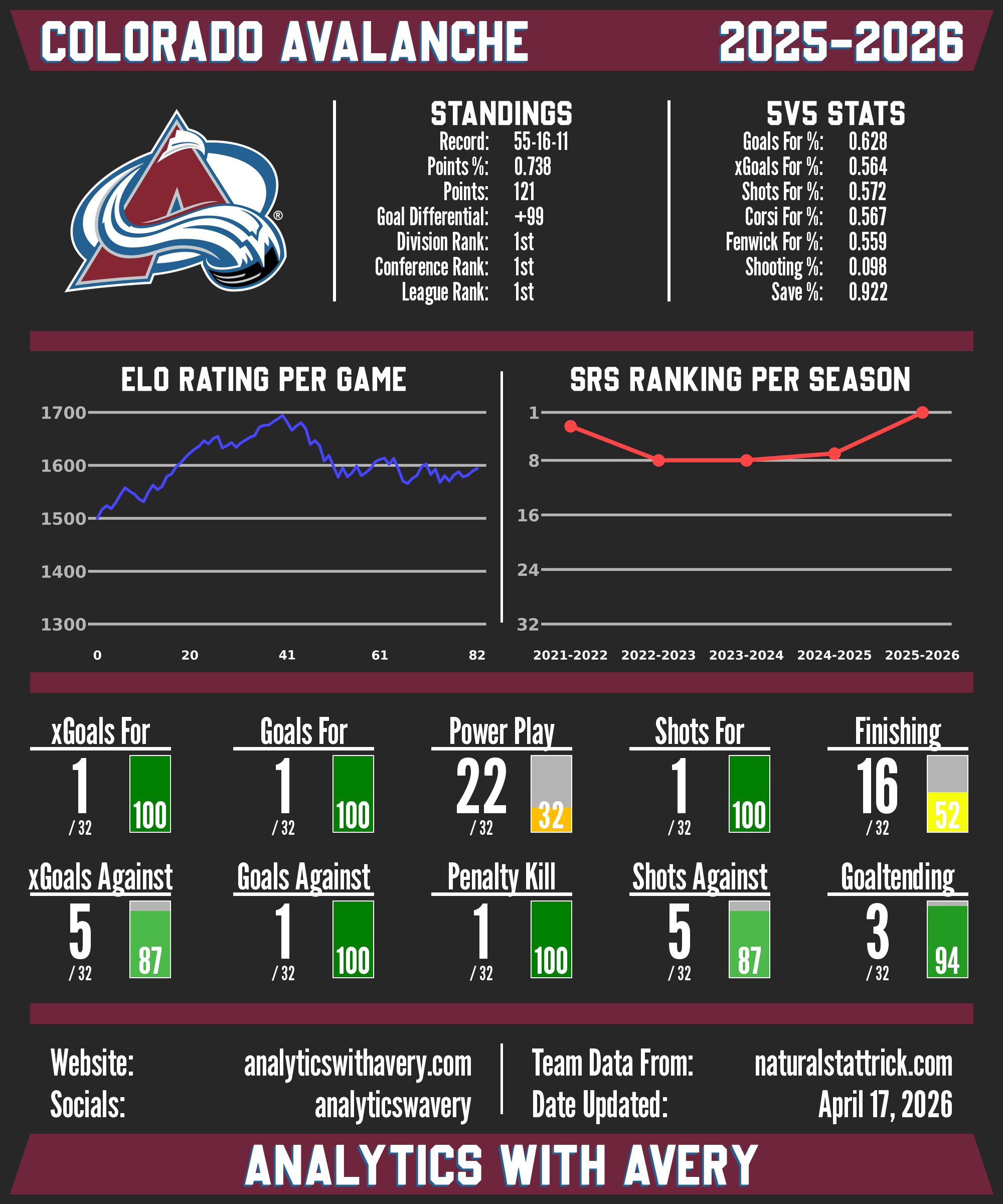
1 - Chris McFarland, Colorado Avalanche
Traded Victor Olofsson, Maxmilian Curran, a first-round pick, and a second-round pick for Nazem Kadri and a fourth-round pick.
Traded a first-round pick and a fifth-round pick for Nicolas Roy.
Traded Charlie Coyle and Miles Wood for Gavin Brindley, a second-round pick and a third-round pick.
Traded Samuel Girard and a second-round pick for Brett Kulak.
Traded a fifth-round pick for Nick Blankenburg.
Signed Martin Necas to an 8x$11.5M extension.
Signed Brock Nelson to a 3x$7.5M extension.
Signed Scott Wedgewood to a 1x$2.5M extension.
Signed Sam Malinski to a 1x$1.4M deal and then a 4x$4.75M extension.
Signed Parker Kelley to a 4x$1.7M deal.
Signed Brent Burns to a 1x$1.0M deal.
2 - Eric Tulsky, Carolina Hurricanes
Claimed Brandon Bussi off waivers from the Florida Panthers.
Traded a seventh-round pick for Nick Deslauriers.
Traded Scott Morrow, a first-round pick, and a second-round pick for K'Andre Miller.
Signed Nikolaj Ehlers to a 6x$8.5M deal.
Signed Logan Stankovan to an 8x$6.0M extension.
Signed Brandon Bussi to a 3x$1.9M extension.
Signed Jackson Blake to an 8x$5.117M extension.
Signed Eric Robinson to a 4x$1.7M extension.
Signed Joel Nystrom to a 4x$1.225M extension.
3 - Kyle Dubas, Pittsburgh Penguins
Traded Danton Heinen, a second-round pick, and a third-round pick for Egor Chinakhov.
Traded Tristan Jarry and Samuel Poulin for Stuart Skinner, Brett Kulak, and a second-round pick.
Traded Chase Stillman and a fourth-round pick for Arturs Silovs.
Traded Alex Nedeljkovic for a third-round pick.
Signed Anthony Mantha to a 1x$2.5M deal.
Signed Justin Brazeau to a 2x$1.5M deal.
Signed Parker Wotherspoon to a 2x$1.0M deal.
Drafted Ben Kindell 11th overall in the 2025 draft and signed him to a 3x$0.975M deal.
Hired Dan Muse to be the head coach.
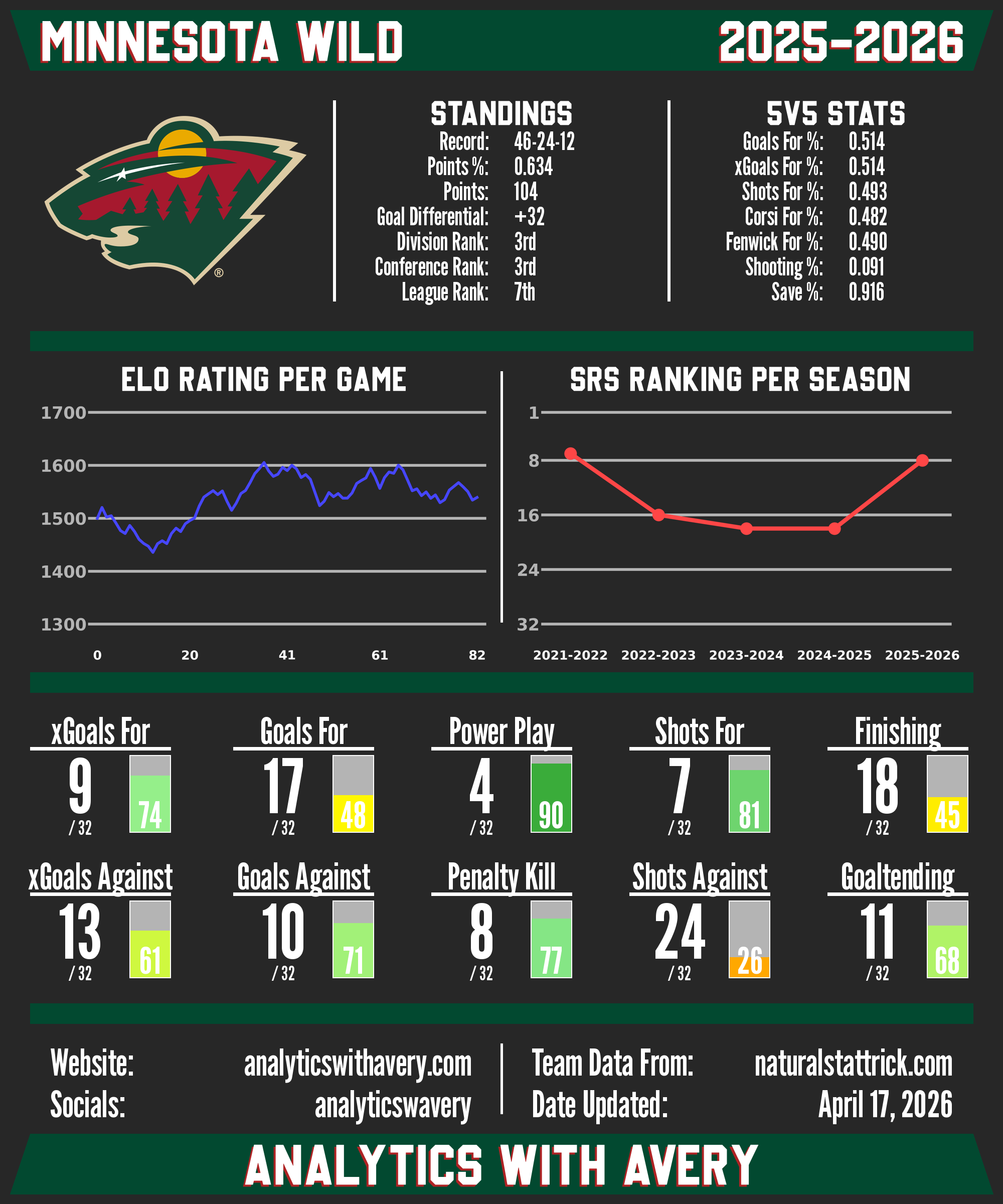
4 - Bill Guerin, Minnesota Wild
Traded Zeev Buium, Marco Rossi, Liam Ohgren, and a first-round pick for Quinn Hughes.
Traded future considerations for Vladimir Tarasenko.
Traded a second-round pick for Michael McCarron.
Traded David Jiricek for Bobby Brink.
Traded Frederick Gaudreau for a fourth-round pick.
Signed Kirill Kaprizov to an 8x$17.0M extension.
Signed Filip Gustavsson to a 5x$6.0M extension.
Signed Marcus Johansson to a 1x$0.8M extension.
Signed Nico Sturm to a 2x$2.0M deal.
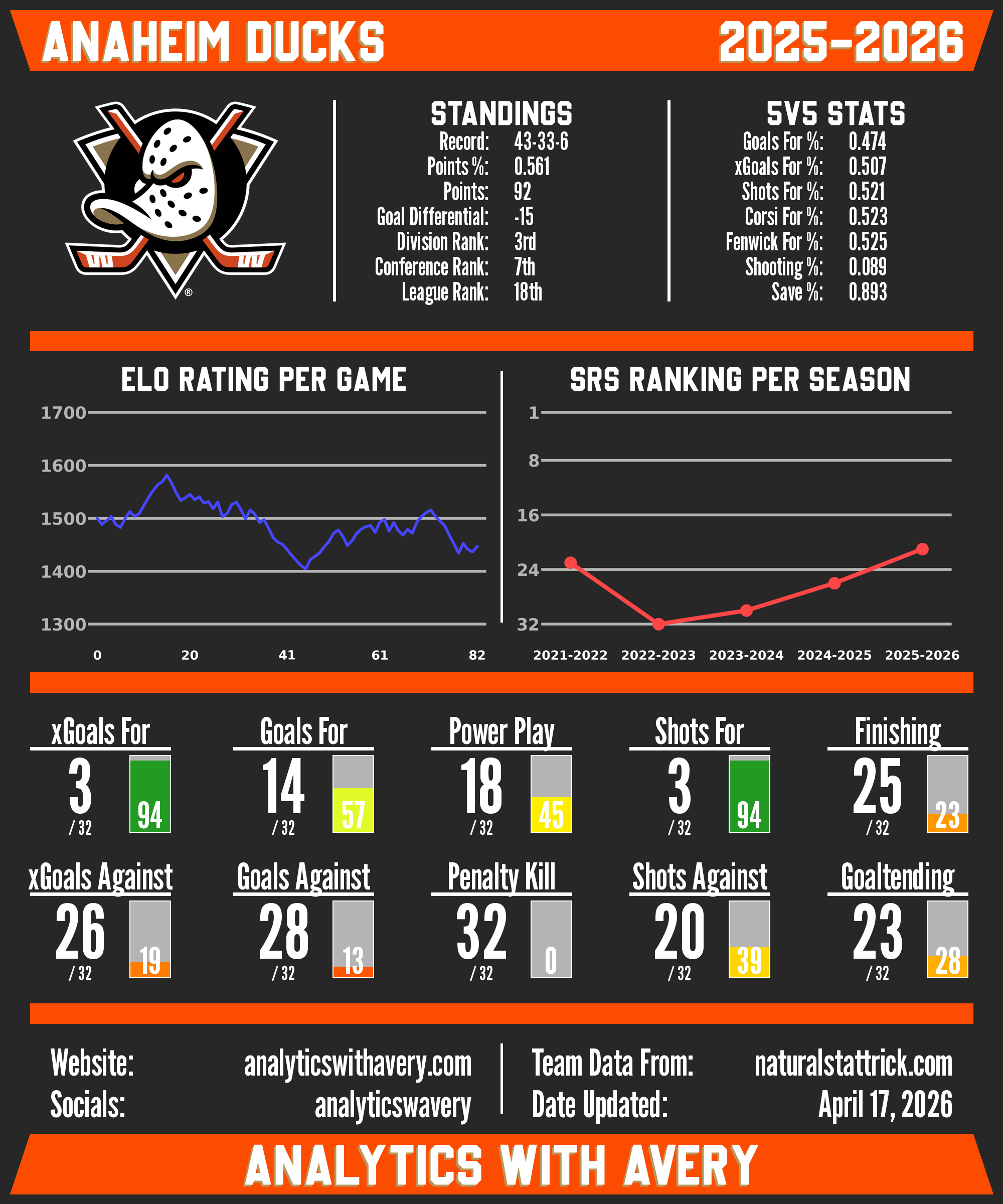
5 - Pat Verbeek, Anaheim Ducks
Traded a first-round pick for John Carlson.
Traded Ryan Strome for a seventh-round pick.
Traded John Gibson for Petr Mrazek, a second-round pick, and a fourth-round pick.
Traded Trevor Zegras for Ryan Poehling, a second-round pick, and a fourth-round pick.
Traded Carey Terrance and a third-round pick for Chris Kreider and a fourth-round pick.
Signed Jackson LaCombe to an 8x$9.0M extension.
Signed Lukas Dostal to a 5x$6.5M extension.
Signed Mason McTavish to a 6x$7.0M extension.
Signed Ryan Poehling to a 4x$3.75M extension.
Signed Ville Husso to a 2x$2.2M extension.
Signed Mikael Granlund to a 3x$7.0M deal.
Hired Joel Quenneville to be the head coach.
Thoughts
For the Jim Gregory, I focused on roster-building decisions that had a clear impact on team success this season. It’s worth noting that this award is voted on after the first round of the playoffs, so the top three are typically general managers of teams that advance that far. However, my selections were made before the first round concluded and are based strictly on regular-season results. Chris McFarland gets my top spot, as it’s difficult to point to a single move he made this season that didn’t work out. His decisions clearly paid off, with the Colorado Avalanche emerging as the best team in the league. He added strong value through underrated signings like Sam Malinski, Parker Kelley, and Brent Burns, while also improving the roster at the deadline by acquiring Nazem Kadri and Nicolas Roy.
Eric Tulsky made some of the most impactful moves of the offseason by signing Nikolaj Ehlers and trading for K’Andre Miller. He also stood out with some very strong extensions for Logan Stankoven and Jackson Blake, along with a seemingly small move at the time that turned out to be one of the most important in claiming Brandon Bussi off waivers. For Kyle Dubas, the theme of the season was value. While he didn’t make the biggest splash, he consistently found strong returns on smaller moves. He signed good players on low-cap hit deals, including Anthony Mantha, Justin Brazeau, and Parker Wotherspoon. He also gave up very little to acquire young goaltender Arturs Silovs, and he added a promising player in Ben Kindell with the 11th overall pick.
Bill Guerin didn't have the same overall value, but made the biggest move of the season by acquiring Quinn Hughes. He also added good peices with smaller moves, including trading nothing for Vladimir Tarasenko, re-signing Marcus Johansson on a team-friendly deal, and making depth additions at the deadline. The Kirill Kaprizov extension is slightly expensive, but retaining a player of his caliber justifies the cost. Pat Verbeek helped guide the Anaheim Ducks back to the playoffs by building a balanced roster of young talent and experienced players. The extensions for Jackson LaCombe and Lukas Dostal look great, and acquiring John Carlson for a first-round pick provided a significant boost for their playoff push.
Conclusion
Overall, this season provided no shortage of standout performances across the league, making each of these races both competitive and, at times, difficult to separate. By focusing on a combination of traditional production and underlying metrics, these selections aim to highlight the players, coaches, and general managers who had the most meaningful impact during the 2025-2026 regular season.
At the same time, NHL awards are not always voted on based solely on individual performance, whether intentional or not. Reputation, team success, recent narratives, and media visibility often play a significant role in shaping the final results, which can lead to deserving candidates being overlooked in favour of more recognizable names. While the official outcomes may differ, the goal of this analysis is to offer a perspective rooted in performance and context, and to share my opinion on who truly stood out this season.